Last updated November 17, 2026


Free written scope consultation - allowances, timeline, and change-order rules on paper before a single trade is scheduled
The Complete Guide to Construction in Paradise
Most “local” construction guides are copy-pasted from a national template with a city name swapped in at the top. Here’s what actually changes when you build or remodel in Paradise, NV specifically. The soil under half these lots isn’t the soil under Las Vegas. The permit counter isn’t the city’s – it’s Clark County’s. And the summer heat redraws your entire construction schedule whether your contractor plans for it or not. This guide covers jurisdiction, caliche, HOA overlaps, heat sequencing, and the realistic timeline from first call to final inspection so you can price a project and spot a contractor who’s never actually worked a Paradise address.
Quick Answer
Construction in Paradise, NV runs under Clark County jurisdiction, not the City of Las Vegas, and most residential projects need county permits plus a separate HOA approval that can override county code on details like fence height, roof color, and material. Caliche layers and expansive soils in the Paradise and Sunrise Manor corridor affect foundation and demo work, and summer heat (routinely past 110°F) reshapes concrete pours, adhesive curing, and roofing windows. A typical bathroom remodel takes six to ten weeks from first call to final inspection; a whole-home renovation runs four to eight months.
Styles & brands we work with
- Kitchen remodeling
- Bathroom remodeling
- Home additions & ADU
- Roofing
- Windows & doors
- Driveway & pavers
- Fence
Table of Contents
- Who Actually Issues Your Permit in Paradise?
- Caliche, Expansive Soil, and What It Means for Your Foundation
- HOA Rules vs. County Code: Which One Wins?
- How Summer Heat in Paradise Reshapes Construction Sequencing
- The Realistic Timeline from First Call to Final Inspection
- Step-by-Step: Pulling Permits for a Paradise Address
- Materials That Hold Up in the Mojave Desert
- When DIY Makes Sense and When It Doesn’t
Who Actually Issues Your Permit in Paradise?
Paradise is an unincorporated town, which surprises a lot of homeowners who assume everything inside the Las Vegas Valley answers to the City of Las Vegas. It doesn’t. Paradise sits under Clark County jurisdiction for building permits, plan review, and inspections. That single fact changes your paperwork, your inspection schedule, and sometimes your project cost.
Here’s the practical difference. The county’s building department runs its own plan review queue, its own inspector assignments, and its own fee schedule. A contractor who files Paradise projects through a City of Las Vegas portal will get rejected, refiled, and delayed – and those delays can cost you weeks before a single tool comes off the truck.
What you need to confirm before work starts:
- Permit type. Cosmetic work (paint, flooring over existing subfloor, cabinet swaps without moving plumbing or electrical) usually doesn’t need one. Anything structural, any new electrical circuits, any plumbing relocation, and most bathroom and kitchen remodels do.
- Plan review. Larger scopes get a formal review cycle. Small scopes may qualify for over-the-counter approval if the drawings are clean.
- Inspection sequencing. Rough framing, rough electrical, rough plumbing, then insulation, then drywall, then final. Miss a rough inspection and you’ll tear out drywall to expose the work.
- Fee calculation. County fees scale with project valuation, so a bathroom remodel and a whole-home renovation don’t carry the same permit cost.
Written line-item quotes should name the permit cost as a separate line. If a price is vague on permits, ask specifically whether the county fee is included and whether the contractor pulls it or hands the paperwork to you. We pull them ourselves on every project, and the inspection record is part of the file you keep.
For a broader view of how we run projects across the valley, see our Sawyer Remodeling Paradise home page.
Caliche, Expansive Soil, and What It Means for Your Foundation
Dig a footing in Paradise and you might hit a caliche layer – a cement-like calcium carbonate crust that forms in desert soils and can be hard enough to stop a trencher. It’s not a foundation killer on its own, but it’s a planning problem. Demo crews who expect soft soil show up underpowered and lose days.
The second issue is expansive clay. Parts of the Paradise and Sunrise Manor corridor sit on soils that swell when they take on water and shrink when they dry out. In the Mojave that’s a seasonal whiplash: winter moisture, summer bake. Over years, that cycle moves a slab. You’ll see it as hairline cracks in drywall at ceiling corners, sticking doors, or tile that pops along a grout line.
How we handle it in this corridor:
- Look before we dig. Foundation plans for tile and flooring installs start with a slab check – crack mapping, moisture readings, and a level run along the longest wall.
- Plan for caliche. Any project touching grade (patios, additions, new footings) gets a dig estimate that assumes caliche. Better to price it at the front than to discover it mid-pour.
- Treat root causes before surfaces. A popped tile isn’t a tile problem if the slab is moving. We address the slab and waterproofing underlayment before the new tile goes down – Schluter edge trim (the metal strip that waterproofs where your tile meets the floor) is part of the sequence, not an upgrade.
If you’re also planning exterior work, be careful about installing a fence or gate post into compacted caliche without proper footing depth. A brand like Master Halco makes durable fencing hardware, but the hardware only holds if the post footing is set for the soil type.
HOA Rules vs. County Code: Which One Wins?
County code sets the legal floor. HOA rules can be stricter, and when both apply, the stricter rule governs your project. Paradise is heavily HOA-covered – large planned communities cover a big share of the town – so almost every exterior change runs through two approval channels.
Where the two collide most often:
- Fencing. County code allows a range of fence heights. Your HOA may cap it lower and set the material and color. Follow the lower number.
- Roof color and material. County code covers safety and structural requirements. HOA architectural review controls what the roof actually looks like – a GAF or CertainTeed shingle that passes county code can still be rejected by your architectural committee for color.
- Windows and doors. Therma-Tru door systems and ViewLux window replacements look great on paper, but the HOA has to approve the grid pattern, finish, and profile before ordering.
- Additions and ADUs. County zoning controls lot coverage and setbacks. HOA rules often add side-yard buffers and design review that stretch the approval timeline.
Practically: pull your HOA architectural guidelines before design drawings are finalized. We submit the design package to both the county and your architectural committee in parallel – waiting to clear the county before starting the HOA submission is one of the most common delay traps in Paradise. The architectural review is often the slower clock, so starting it early saves weeks.
If your project touches the kitchen or bath, the scope usually triggers both approvals – our Bathroom Remodeling in Sunrise Manor and Kitchen Remodeling in Sunrise Manor pages walk through the review side of those jobs.
How Summer Heat in Paradise Reshapes Construction Sequencing
Paradise routinely runs past 110°F in July and August. That’s not a comfort issue for crews – it’s a chemistry issue for materials. Concrete cures too fast and can crack. Tile adhesive skins over before the tile sets. Caulk and sealants fail to bond. Roof shingles get soft and hard to seat properly. And exterior paint sets too quickly to flow out, leaving brush marks.
What changes in the schedule:
- Concrete pours move to early morning. We schedule exterior pours between 4:00 and 8:00 AM during peak summer, and add a curing compound or set-retarder to slow the cure. Afternoon pours in July are a known failure path.
- Tile setting happens inside, early. Interior tile work runs before noon if the home’s AC can’t hold the room cool enough for the adhesive to set properly.
- Roofing windows shift to shoulder seasons where possible. If a roof can wait until October, we wait. If it can’t, we start before sunrise and stage materials in the shade.
- Exterior paint waits for under-100°F mornings. A coat that sets too fast chips early.
If you’re scheduling a spring or early summer project in Paradise, ask your contractor directly: “How does your schedule change when it’s 112°F?” A contractor without a specific answer hasn’t done a July job here.
The Realistic Timeline from First Call to Final Inspection
Here’s the honest range for Paradise projects, from first call to final inspection sign-off. These are the same ranges we quote on every written estimate:
- Bathroom remodel (full): 6 to 10 weeks, including permit and inspection. Mid-range $12,000-$30,000, depending on tile, fixtures, and whether the layout moves.
- Kitchen remodel: 8 to 14 weeks. Mid-range $28,000-$70,000, depending on cabinetry, countertops, and whether a wall or plumbing line moves.
- Whole-home renovation: 4 to 8 months. $80,000 and up, tied tightly to scope.
- Roof replacement: 1 to 3 weeks, weather and inspection dependent. $9,000-$25,000.
- Bathroom refresh (cosmetic, no permits): 1 to 3 weeks.
Where the timeline actually breaks:
- Plan review queue length. County review time fluctuates with seasonal volume. A clean submittal clears faster than one that gets kicked back for a missing detail.
- HOA architectural review. Often the longest single waiting block – sometimes four to six weeks on its own.
- Material lead times. Cabinetry from KraftMaid or Wellborn, custom countertops from Cambria or Silestone, and special-order windows can each add weeks. Ordering before design is approved risks reorder costs.
- Inspection scheduling. County inspectors have their own calendar. Missed rough-ins can push a project two weeks.
A realistic written schedule on day one beats a promise of “two weeks.” If a contractor gives you one number without range, get a second quote.
Step-by-Step: Pulling Permits for a Paradise Address
For reference, here’s the sequence we run on every Paradise project. Doing these in order is what keeps a project from stalling at inspection.
- Confirm jurisdiction. Verify the property is in unincorporated Paradise (Clark County), not an adjacent city limit. A half-block difference changes the entire permit path.
- Pull HOA architectural guidelines and submit the design package early. County and HOA approvals run in parallel, not sequentially.
- Prepare drawings. Scope-specific drawings showing framing, electrical, plumbing, and finish schedules. County plan review rejects incomplete drawings.
- Submit to Clark County and pay the fee. Depending on scope, plan review runs a review cycle or over-the-counter approval.
- Schedule rough inspections (framing, electrical, plumbing). Inspector signs off before drywall closes the walls.
- Insulation and drywall inspection. Second inspection gate.
- Final inspection and certificate of occupancy (if applicable). All trades signed off before the job closes.
You keep copies of every permit, every inspection, and the written price that was approved before work started. That’s the paper trail that protects you on resale.
Materials That Hold Up in the Mojave Desert
Desert heat is hard on exterior materials. West-facing walls cook in the afternoon sun. UV fades anything cheap fast. Door and window gaskets dry out. Paint chalks.
What we specify for Paradise homes:
- Roofing: GAF, CertainTeed, and Owens Corning systems – all rated for high heat and UV. Contractors who use off-brand shingles without manufacturer backing lose you the warranty.
- Siding: James Hardie fiber cement, which holds up to sun and temperature swings better than vinyl in this climate.
- Doors: Therma-Tru exterior door systems with proper thermal breaks. Cheap exterior doors warp in this heat.
- Windows: Low-E glass with argon fill. It matters far more here than in milder climates.
- Interior surfaces: Cambria, Silestone, and Caesarstone countertops keep their finish under indoor heat swings. Tile adhesive needs the desert-rated product, not the coastal version.
Every one of those brands is manufacturer-backed. That matters if the product fails: the manufacturer covers it, not a mystery supplier.
When DIY Makes Sense and When It Doesn’t
Some things you can do. Paint interior walls. Replace a toilet seat or a faucet cartridge. Hanging drywall in a closet. Simple cosmetic updates that don’t touch a permit or a safety line.
What you shouldn’t DIY in Paradise:
- Anything electrical. New circuits, panel work, and rewiring are permit-and-inspection territory. A mistake here is a fire risk.
- Plumbing relocation. Moving a drain or supply line under a slab is a genuine failure path when done wrong – and the slab is exactly what you don’t want to break in caliche country.
- Structural work. Opening a wall, adding a beam, cutting a header. Structural mistakes show up years later and cost five figures to fix.
- Bathroom waterproofing. The sequence – cement board, Schluter edge trim, membrane, tile – is exactly what fails first when done casually. A leak inside a shower pan can cost more to repair than the whole shower cost to build.
- Permitted anything. An unpermitted addition or renovation will surface at inspection on resale and cost you in the appraisal and the sale.
For a kitchen or bath, the permit and inspection burden tips the math toward a professional even if your time is free. We run free estimates for that reason – you can price the real job before deciding.
Common Mistakes to Avoid
- Assuming the City of Las Vegas issues your permit. Paradise addresses answer to Clark County. Filing in the wrong jurisdiction is one of the most common delays on first-time Paradise projects.
- Skipping the HOA architectural review. Even if county code allows a project, your HOA may reject the color, fence height, or material mid-install – and the fix is often on your invoice.
- Scheduling a concrete pour in July afternoon. It can crack within days. Morning pours and cure retarders are the only safe path in Paradise summer heat.
- Starting demo before checking for caliche. A dig that assumes soft soil on a caliche-heavy lot can push a footing project days or weeks.
- Ordering custom cabinets or countertops before design approval. If the layout changes, you own the reorder cost. Sequence materials after approval, not before.
- Accepting a verbal price. A number that isn’t written before work starts is a number that grows at the invoice. Ask for the written scope and price.
- Letting a contractor close drywall before rough inspections. If a rough inspection gets missed, drywall comes back off. Insist on copies of every signed inspection.
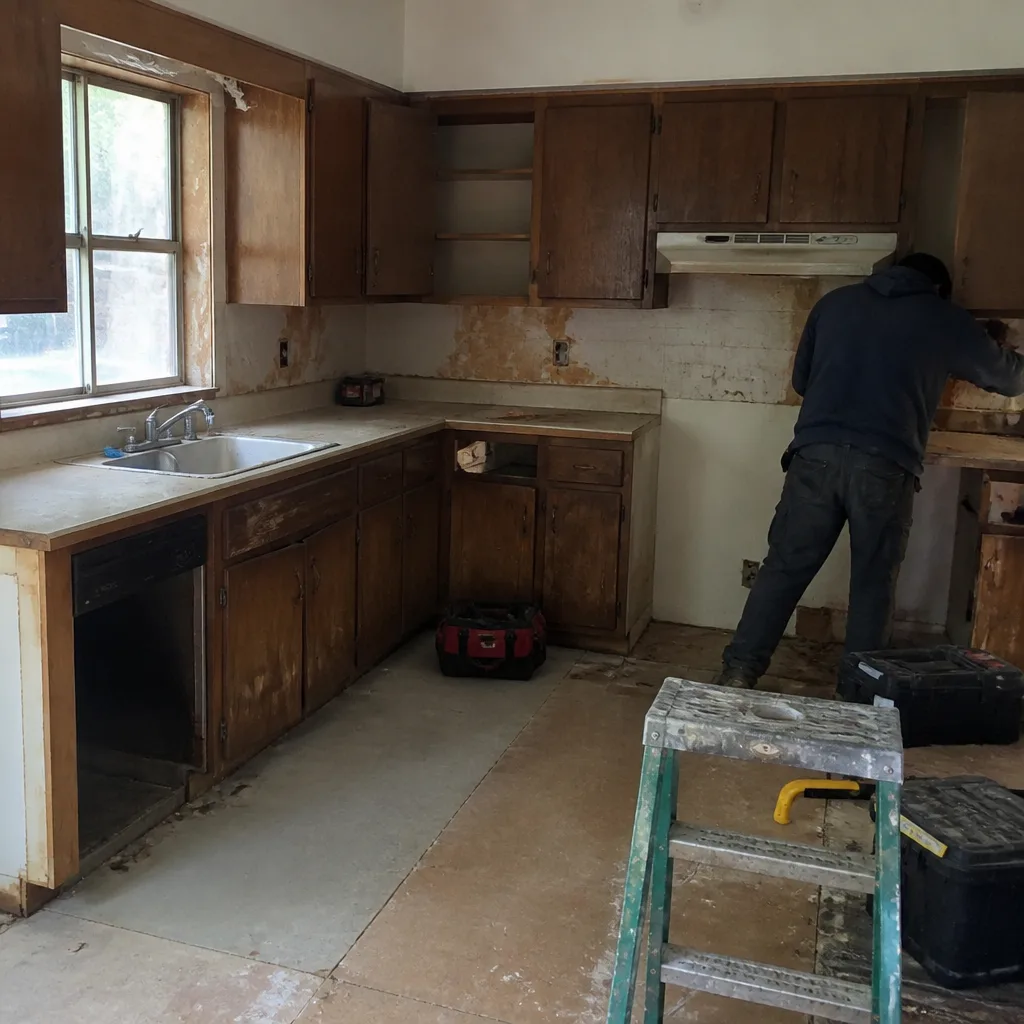
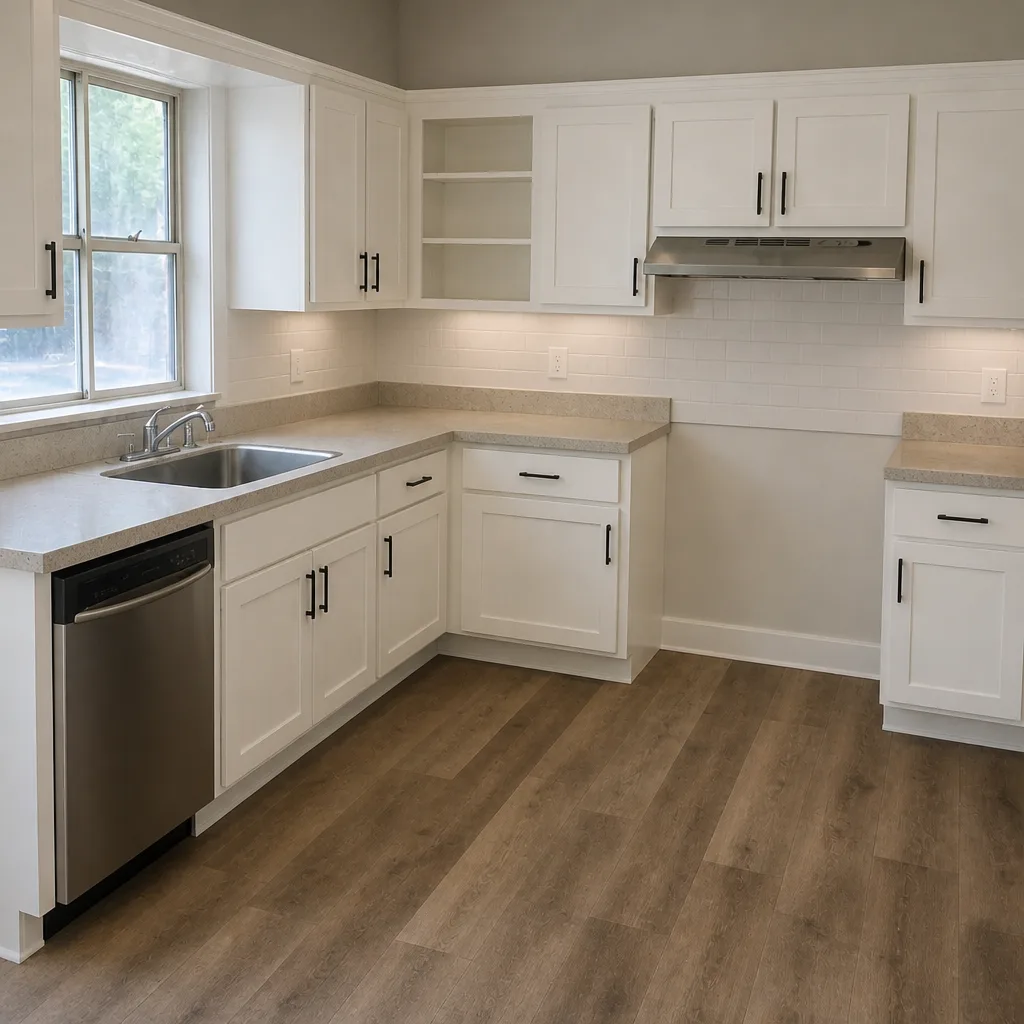
See the difference
 Before
 After
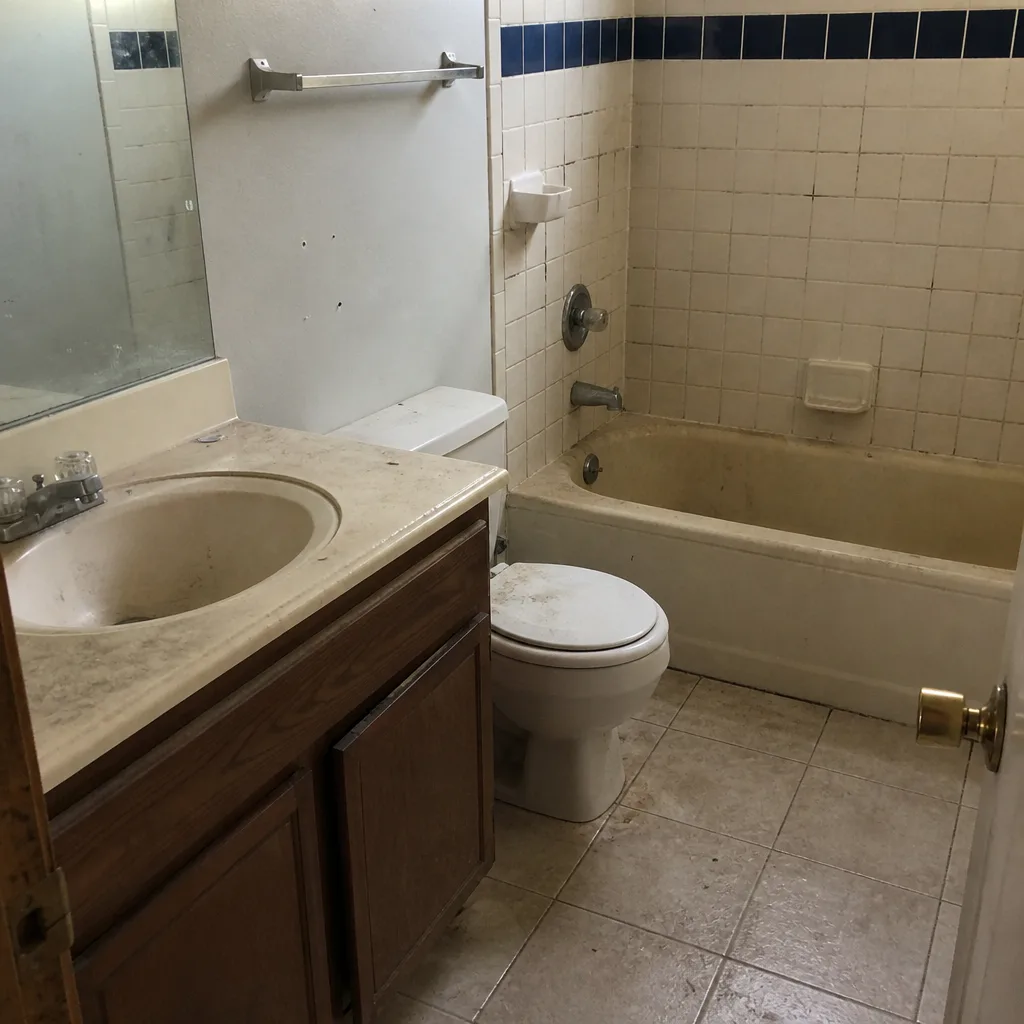 Before
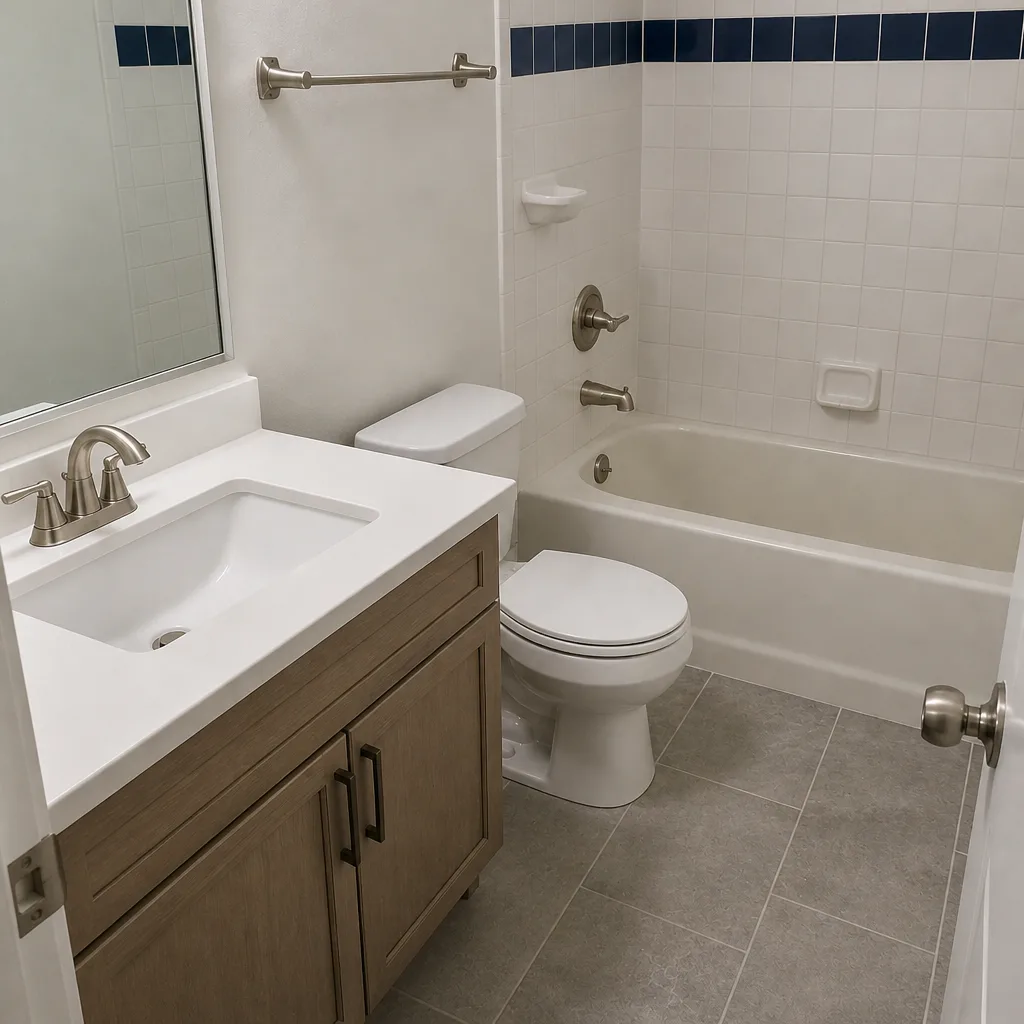 After
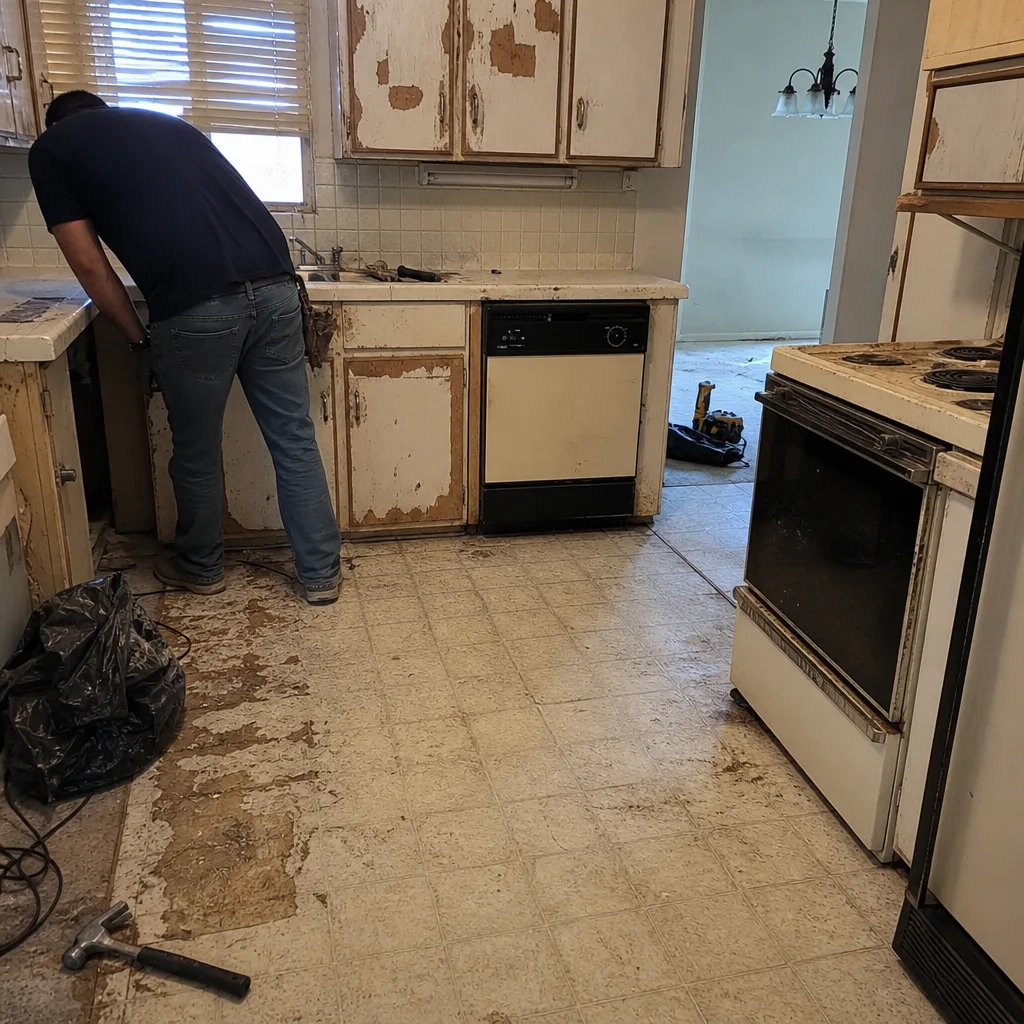 Before
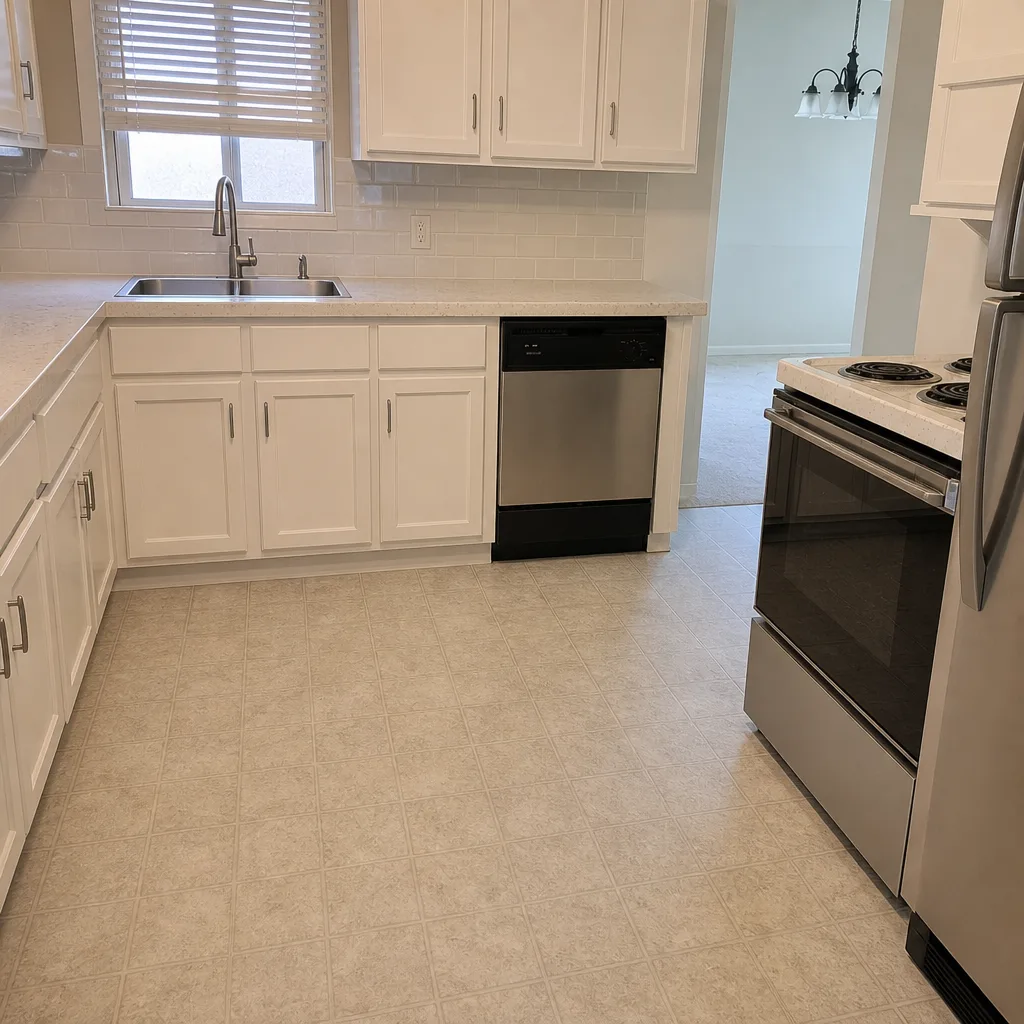 After
When to Call a Professional
Call in a pro when the job touches a permit, a structural wall, an electrical panel, plumbing under a slab, or waterproofing in a wet area. That covers most full bathroom and kitchen remodels, whole-home renovations, roof replacements, and any addition in Paradise. If you’re moving tile over a slab that may be shifting, call before the tile goes down – fixing the slab under new tile is easier than fixing it through the tile. If your HOA has an architectural review, call before the design is drawn. And if the job is on the exterior in July or August, call for the schedule conversation specifically.
Sawyer Remodeling Paradise offers free estimates in Paradise with a written price before any work starts. Call (866) 977-0526 to schedule yours.
Frequently Asked Questions
Clark County issues building permits and inspections for Paradise addresses because Paradise is an unincorporated town, not a City of Las Vegas address. Confirm jurisdiction before design work starts – a filing in the wrong office is one of the most common project delays in this market.
A full bathroom remodel in Paradise typically runs $12,000-$30,000 depending on tile, fixtures, and whether the layout moves. Cosmetic refreshes without permits run less. Call (866) 977-0526 for an exact quote – estimates are free and the price is written before work starts.
When both apply, the stricter rule wins. The HOA can cap fence height, restrict roof color and material, and require design review for windows and doors even when county code would allow the project. Pull HOA guidelines before design is finalized – the architectural review is often the slower clock.
Caliche is a cement-like desert layer that can stop a trencher and stall a footing dig if a contractor plans as if it were soft soil. We price caliche in at the front of any project that touches grade in the Paradise and Sunrise Manor corridor so it’s a known cost, not a mid-pour surprise.
A full bathroom remodel is 6 to 10 weeks; a kitchen is 8 to 14 weeks; a whole-home renovation is 4 to 8 months. HOA review, county plan review, and material lead times are the three biggest variables. Call (866) 977-0526 for a project-specific written timeline.
Not when it’s quoted in writing and approved before the first tool comes off the truck. County fees, HOA resubmittals, and out-of-scope changes should each be listed and approved separately – never rolled silently into the final invoice. Our written price is the number on the invoice.
The Bottom Line
Building in Paradise means building for Paradise. County jurisdiction, not city. Caliche and expansive clay under half the lots. HOA review running in parallel with county review. And a July schedule that changes concrete pours, tile setting, and roof work. Know how these four factors hit your project and you’ll spot a contractor who’s worked here from a contractor who hasn’t. Get the permit path in writing, get the HOA path started early, get the price in writing before work starts, and pull your inspection records. That’s the whole game in Paradise.
Ready to price it? Call (866) 977-0526 for a free estimate with a written price before any work begins.
For remodeling work beyond the scope this guide covers, our General Contractor in Sunrise Manor page walks through full-project oversight.
Written by the team at Sawyer Remodeling Paradise.