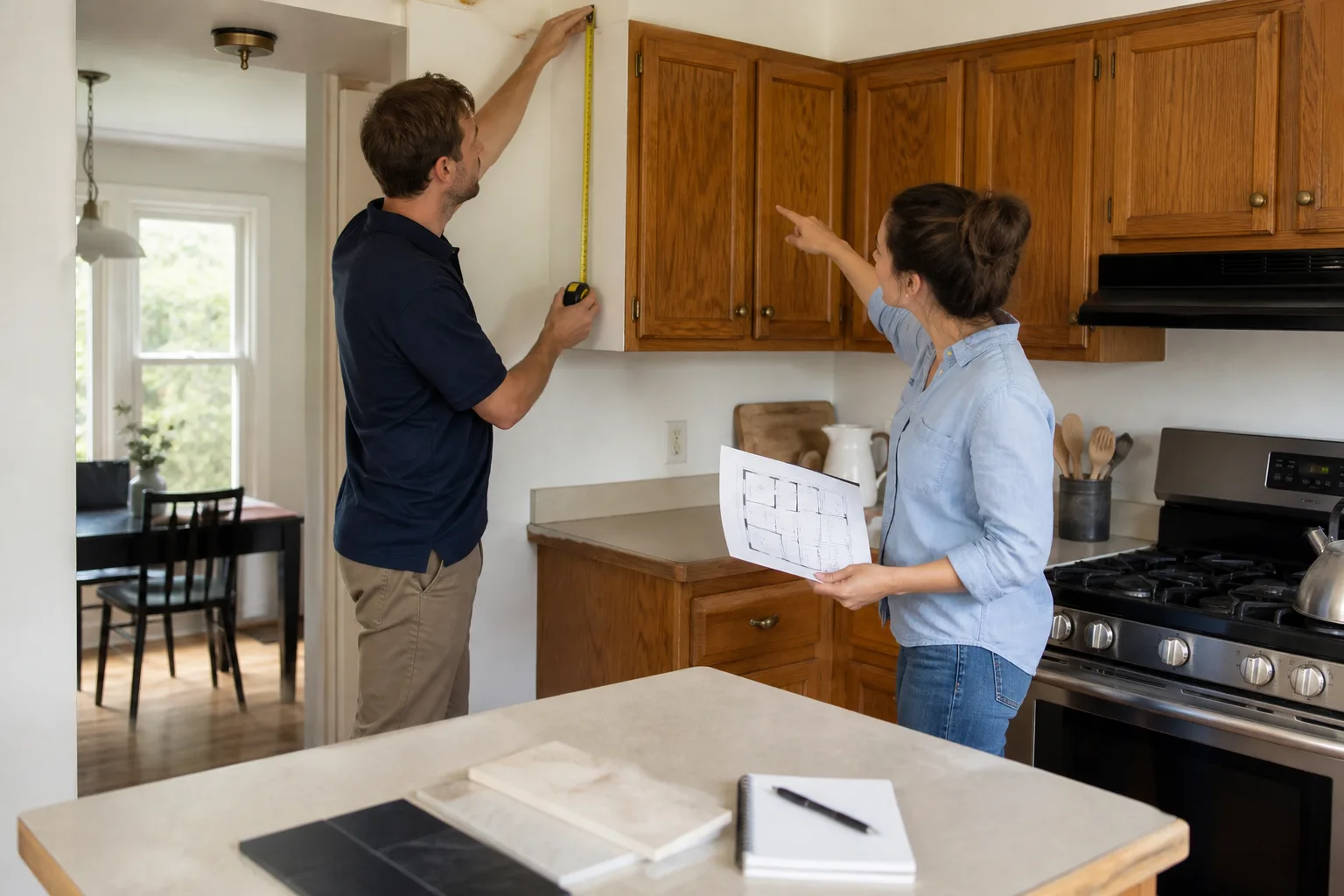
Last updated November 17, 2026








Free written scope consultation - allowances, timeline, and change-order rules on paper before a single trade is scheduled
Construction Warning Signs: A Paradise Homeowner’s Reference Guide
Most construction warning signs aren’t dramatic. They aren’t the contractor who yells or the check that bounces. They’re subtle patterns in how a company communicates before, during, and after the job, and they show up early if you know what to look for. The contractor who ghosts you between visits isn’t just being rude. Silence during a project is one of the most reliable indicators that something has gone wrong and you’re the last to know. In our experience working Paradise neighborhoods from Sunrise Manor to the strip-adjacent condos, the homeowners who end up in disputes almost always describe the same thing: the red flags were there in week one, and nobody named them. This guide names them.
Quick Answer
The biggest construction red flags are no written quote before work starts, a request for more than 50% upfront, and a company that can’t produce a Nevada license number on request. Mid-project, watch for verbal change orders, crews arriving without notice, and response times that stretch longer as the job drags on. Physical signs like uneven grout lines or drywall seams that telegraph through paint usually point to rushed or unqualified labor.
Styles & brands we work with
- Kitchen remodeling
- Bathroom remodeling
- Home additions & ADU
- Roofing
- Windows & doors
- Driveway & pavers
- Fence
Table of Contents
- Pre-Hire Red Flags: What to Check Before You Sign
- The 50% Upfront Rule and Why It Matters
- How to Verify a Nevada Contractor License in Paradise
- Mid-Project Red Flags: When to Start Worrying
- Communication Red Flags That Predict Trouble
- Physical Warning Signs in the Work Itself
- What Your Legal Options Actually Are in Nevada
- Common Mistakes to Avoid
Pre-Hire Red Flags: What to Check Before You Sign
The pre-hire list matters most because it’s the only point where you have real leverage. Once a deposit is in someone’s account, your options narrow. In Paradise, where the heat pushes $115 in July and the wind kicks up dust off the desert, a contractor’s pre-hire paperwork tells you almost everything about how they’ll run the job when conditions get hard.
Here’s what we tell homeowners to check before signing anything:
- No written quote. A verbal estimate is not a quote. It’s a conversation. If the price lives in someone’s head, it can change at the invoice, and you have no paper trail. A real quote itemizes labor, materials, and any allowance ranges so you know where flexibility exists.
- More than 50% upfront. Nevada allows a deposit, but a contractor who can’t float material costs for the first phase is usually a cash-flow problem waiting to land on your project. A large upfront ask often means your deposit is funding the last customer’s job.
- No license number on request. Any capable Nevada contractor will give you a license number without hesitation. If it takes three calls and a text to get one, or the number doesn’t return a match in the state database, stop.
- No physical address, no references nearby. Ask for two or three recent jobs in Paradise or Clark County and call them. A contractor who can’t name a single recent local project is telling you something.
- Pressure to sign today. Nobody needs your signature in an hour. A written price should be something you take to the kitchen table and read twice.
When we quote a job, the price lands in writing before any tool gets picked up. That’s not a courtesy. It’s the baseline we compare every other company against, and it’s the first thing you should ask for from anyone you’re considering for a contractor-led renovation in Sunrise Manor or anywhere else in the valley.
The 50% Upfront Rule and Why It Matters
A deposit larger than half the contract is one of the clearest pre-hire warning signs, and it shows up on almost every dispute we hear about in Paradise. The reasoning is simple: money in a contractor’s account that isn’t tied to work performed is a risk. If the project stalls, or the company dissolves, that deposit is the hardest thing to recover.
What a healthy payment schedule looks like:
- 10% to 20% at signing to cover permits, ordering, and scheduling.
- Stage payments tied to actual milestones, like demo complete, rough-in inspected, and tile set.
- A final payment held until punch list items are done and the job passes inspection.
- Written payment terms spelled out in the contract, not agreed to verbally.
Larger deposits aren’t automatically scams. Some specialty materials or pre-fab systems need real money up front. Pre-fab brands like Boxabl or Dvele, for example, charge significant upfront costs for modules because the factory starts production early. The difference is that those deposits come with a paper trail and a manufacturer agreement, not a handshake and a cashier’s check. If a standard remodeler asks for 60% up front with no contract and no schedule, that’s the flag.
Ask the contractor to explain how their payment schedule ties to progress. If they can’t, you’ve learned something.
How to Verify a Nevada Contractor License in Paradise
Nevada requires contractors to be licensed, and the Nevada State Contractors Board keeps a public database you can search in about two minutes. This matters because unlicensed work is a bigger problem here than in many states. If a contractor gets hurt on your property or a job goes wrong, unlicensed work can complicate your homeowners insurance and leave you without recourse.
Here’s the check we recommend in order:
- Ask for the license number. Not a business registration number, which is pulled from the Secretary of State site. The contractor’s license number, which is specific to construction work.
- Search the state database. Confirm the number matches the company name and that the license is active, not expired or suspended.
- Confirm the classification. Nevada licenses are classified by type of work. A general contractor license doesn’t automatically cover plumbing or electrical specialty work. A bathroom remodel in Paradise that moves plumbing needs the right trades on the license.
- Cross-check the address. The database lists a business address. If it doesn’t match the person or company you’re hiring, ask why.
One of the most common pre-hire red flags we see is a contractor who promises a number and then goes quiet when asked to put it in writing. Any licensed contractor in Paradise will hand over the license number without a second thought. When it comes to a wet-area remodel like a bathroom renovation in Sunrise Manor, where waterproofing and permits both matter, the classification check is worth every minute.
Mid-Project Red Flags: When to Start Worrying
Once the job is running, the warning signs shift from paperwork to behavior. In our experience, most big problems that emerge in Paradise remodels were visible in week one as small patterns, not as sudden disasters. The following list is where we see homeowners start to get uncomfortable, and usually rightfully so.
- Crews on site without notice. If workers show up on a Saturday morning without a call or a text, you don’t know who’s in your home or what they’re doing. That’s a safety and a control problem. A real contractor confirms who’s coming and when before they’re at the door.
- Materials that don’t match the spec. Look at what’s being unloaded. A tile box that’s a different color lot, a countertop slab that isn’t the one you chose, or a plumbing fixture brand that isn’t the one in the contract are all mid-project red flags. Real spec changes go through you in writing.
- Verbal change orders. This is the most expensive pattern in the whole list. If a contractor walks up mid-job and says “that’s gonna cost extra,” there should be a written change order with a price and a signature before the work continues. If they never put it in writing, the price gets invented at the end.
- Subcontractors nobody told you about. New faces in the house are normal in remodeling, but new faces without a heads-up aren’t. Ask who’s coming. Confirm insurance on the subcontractor side.
- Permit work that stalls. If the inspection was scheduled two weeks ago and now nobody has the paperwork, that’s not a small issue. It means the job isn’t technically compliant yet.
If a contractor can’t show you a written change order on a scope change, you’re heading toward an invoice surprise. We include a written price before any work starts and update it in writing whenever the scope genuinely shifts, so the number on the invoice is the number you approved. That’s the pattern to look for in a kitchen project in Sunrise Manor as much as anywhere else.
Communication Red Flags That Predict Trouble
The way a contractor communicates before the job is the way they’ll communicate during it. Almost every dispute we hear about starts with a response time that stretched from two hours to two days to a week, and nobody noticed the trend until the job was a month overdue.
Here’s what to watch for:
- Response times that get longer as the project does. If the first week is all-day texting and the fifth week is radio silence, something has gone wrong and you’re the last to know.
- Vague answers about timeline. “It’ll be done soon” isn’t a schedule. Ask for specific dates for each milestone and check whether they move when you ask why.
- Voicemail loops. If you can’t reach a human being on the phone during a project, that’s not a busydesk, it’s a red flag. Silence during a job is how you find out the drywall’s been open for a month and nobody ordered the tile.
- Answers that change. If the same question about a delay gets three different answers, the person on the other end doesn’t have the facts.
- No paper trail. A contractor who runs the whole job by phone call is a contractor who can’t produce a record when there’s a dispute.
We answer our phones with a live person, day or night, and send photo updates before and after each phase. That’s how a homeowner in Paradise knows what’s happening without chasing anyone. You can also check how we describe the whole model on our Sawyer Remodeling Paradise home page, where the Visibility Guarantee is spelled out: a live arrival time, photo updates, and a written price before work starts.
Physical Warning Signs in the Work Itself
You don’t have to be a journeyman to spot problems in the work. Some of the cleanest early warning signs are visual, and they show up in places that are easy to check with your own eyes before the job is finished.
- Fastener patterns. Drywall screws should run in a consistent grid with reasonable spacing. If they’re scattered or driven too deep, the wall will telegraph cracks once the paint dries and the desert temperature swings between day and night start working on it.
- Uneven tile grout lines. Run your hand across a wet-area floor. If the grout depth varies by more than a fraction of an inch, or the tile lips stick up where they meet, the layout wasn’t planned. In a Paradise bathroom with daily temperature swings and low humidity pulling moisture out of the substrate, an uneven tile plane can start to fail within the first year.
- Drywall seams that show before paint. Hold a flashlight at a low angle along the walls once primer goes up. Shadows that trace a seam mean the mud bed was rushed. That’s the seam you’ll see under paint for the next decade.
- Caulk applied over movement. Caulk is a gap-filler, not a fix. If you’re seeing new caulk at a spot that was just repaired, ask why the substrate shifted.
- Doors and windows that don’t sit flush. In a Paradise remodel, framing shifts from heat and settling are common. A door that catches at the top corner is telling you the frame is out of square.
None of these individually is a disaster. A pattern of them together is a sign the crew was rushed, under-skilled, or both. That’s when the 365-Day Done Right Promise earns its value, because a job that fails in month three gets fixed in month three, not three years later.
What Your Legal Options Actually Are in Nevada
If a contractor abandons a job, performs unlicensed work, or the work fails inspection in Nevada, you have real recourse. Here’s the practical order of operations we’d walk a Paradise homeowner through.
- Document everything in writing. Emails, texts, photos of the work, the signed contract, payment records, and the license number. The paper trail is the case.
- File a complaint with the Nevada State Contractors Board. This is the single most effective step for licensed contractors. The board can investigate, order corrections, and in serious cases take action against the license.
- Send a written demand. A clear letter stating what was promised, what happened, and what you want done. Give a deadline. This creates a record and often resolves the issue without lawyers.
- Contact your homeowners insurance. If damage was caused by the work, coverage may apply. Confirm before you accept a settlement that closes the door on the claim.
- Hire a construction attorney if the amount justifies it. For deposits over a few thousand dollars, the math usually works. For smaller amounts, small claims court in Clark County is a reasonable route.
- Get a second opinion in writing. A licensed contractor can document what was done wrong, and that documentation becomes the anchor for negotiation or a complaint.
Keep in mind that recovery is much harder if the contractor was unlicensed to begin with. That’s why the license check is the number one pre-hire step. Under Nevada law, unlicensed contractors can’t collect for work they weren’t licensed to perform, which sounds like protection, but it also means you may struggle to recover what you already paid. Ask for the number before signing, not after the problem.
Common Mistakes to Avoid
- Accepting a verbal quote. The number in your head is not the number on the invoice. Ask for it in writing, in dollars, before anybody picks up a tool.
- Paying more than 50% upfront. A large deposit often funds the last job, not yours. Tie payments to milestones and keep a final payment until the punch list is closed.
- Skipping the license check. Two minutes on the Nevada State Contractors Board database saves months of dispute. In Paradise, where we regularly see unlicensed crews working on weekend flip jobs, the check matters more than in many parts of the country.
- Accepting verbal change orders. A scope change without paper is a price change you didn’t agree to. Every change gets a written price and a signature.
- Not noticing longer response times. If messages that took two hours in May take two days in June, you’ve got a problem, and the fix is a phone call that reaches a live person, not a polite voicemail.
- Ignoring the physical signs. Uneven grout, shadowing drywall seams, and ceilings that don’t sit flush are the work telling you what’s coming. Walk the job with a flashlight once a week.
- Confusing a low price for a good deal. Low bids that skip permits, subs, or materials are the most expensive option. A written quote with a fixed schedule and a guarantee is what protects you, not the lowest number on the page.
See the difference
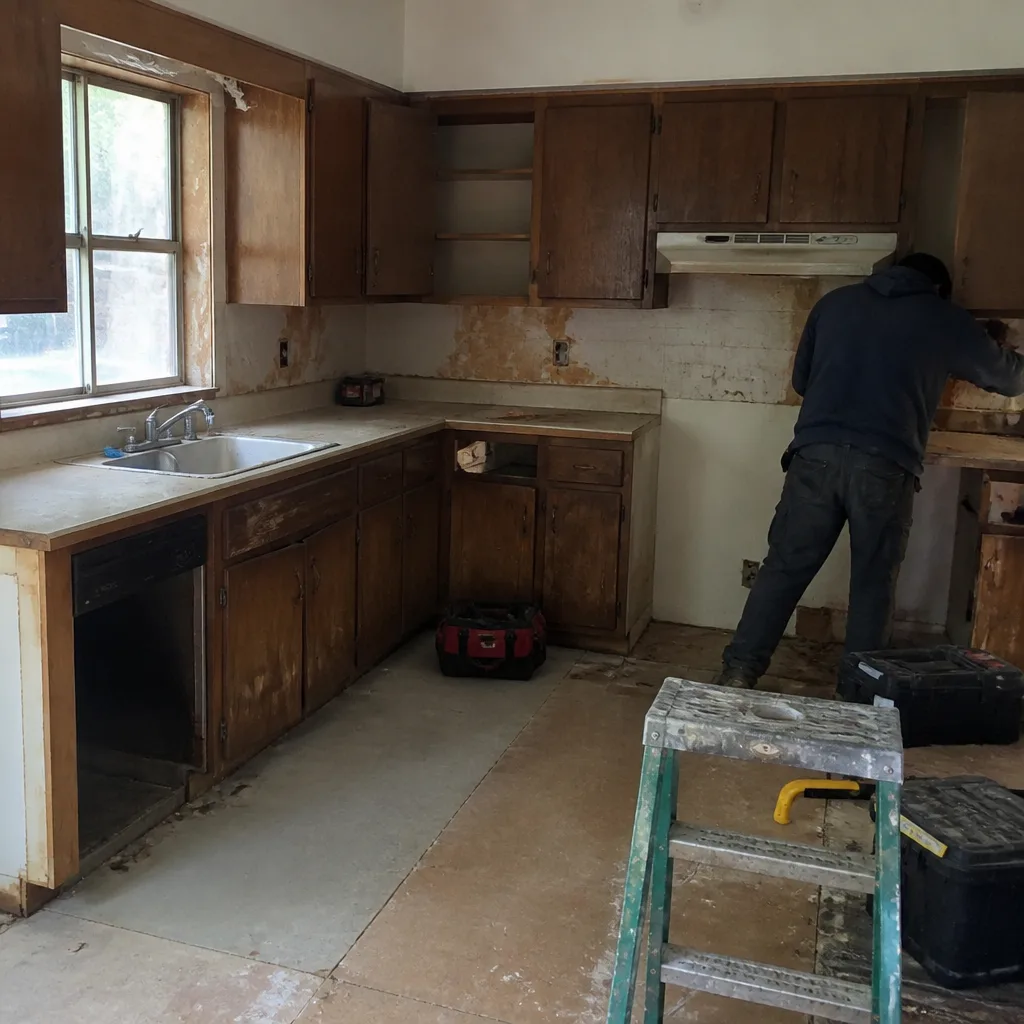 Before
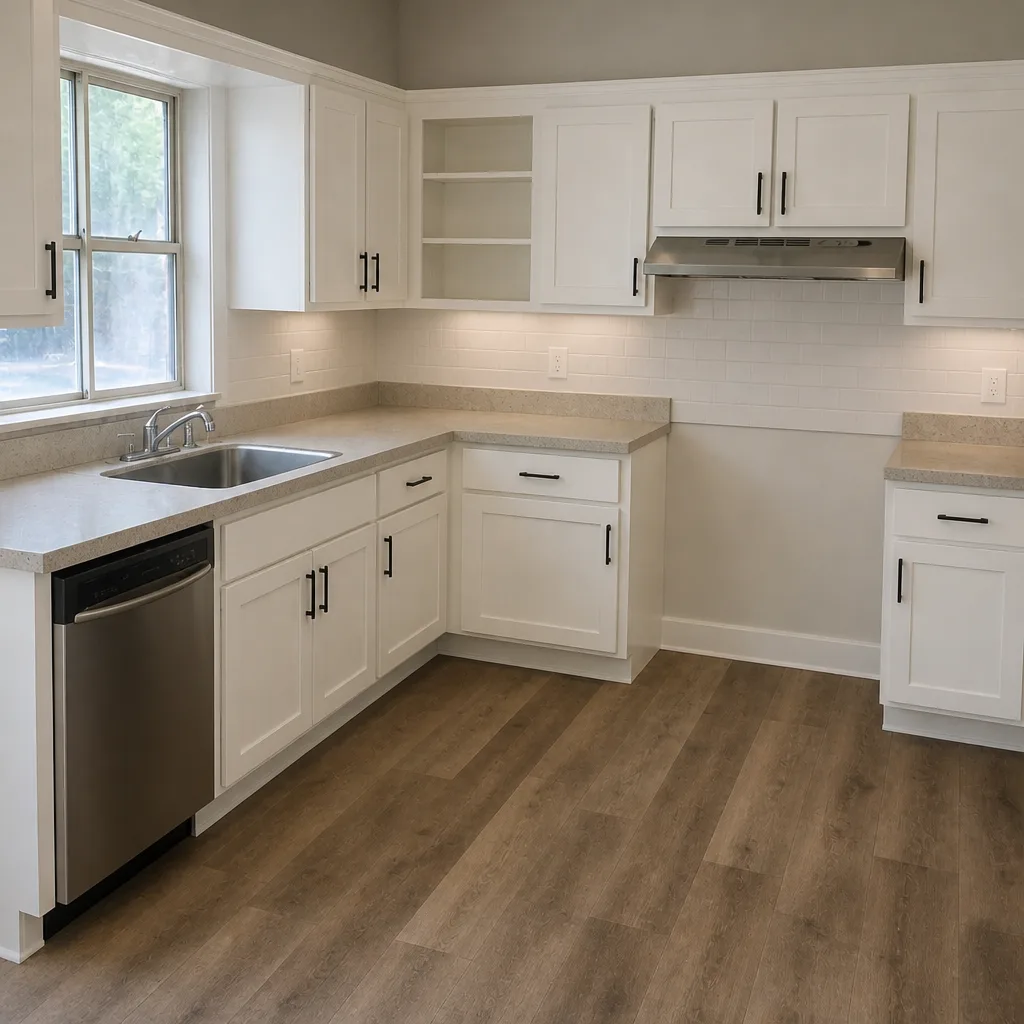 After
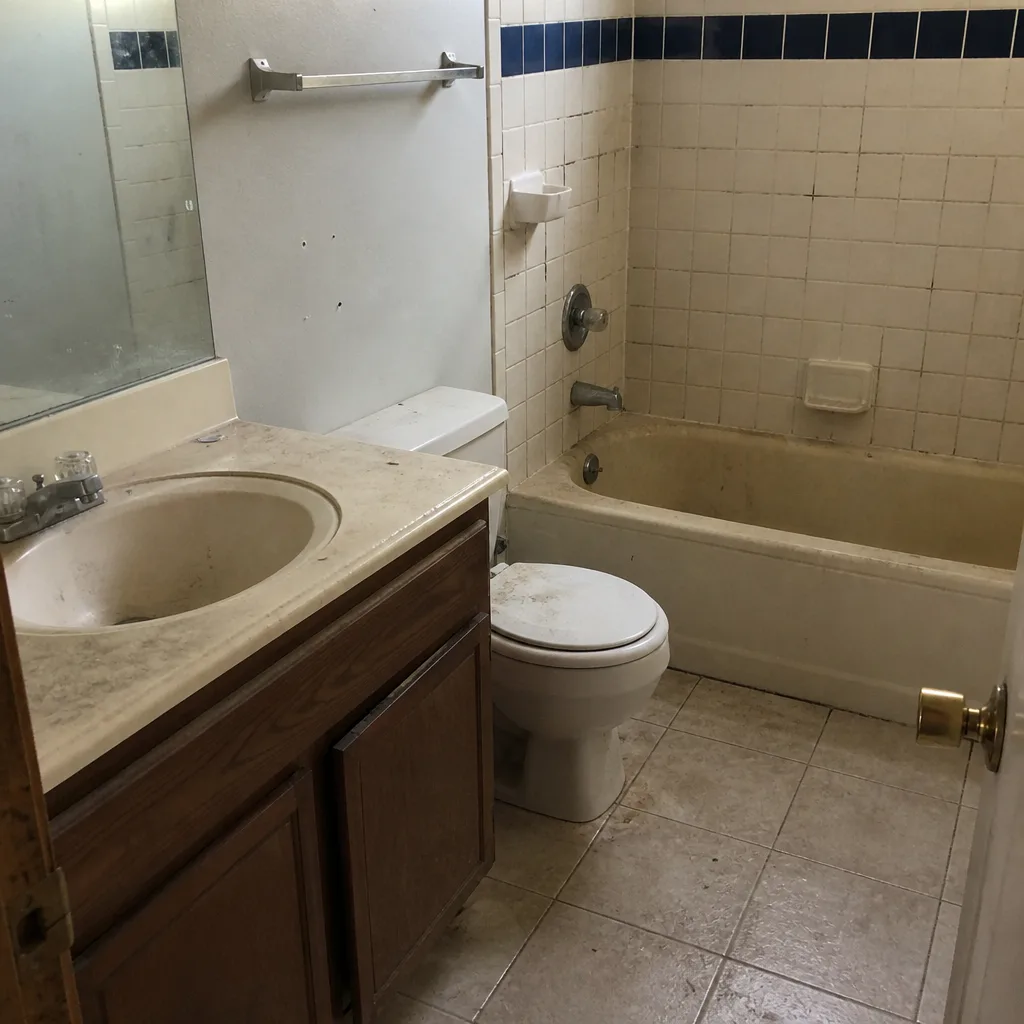 Before
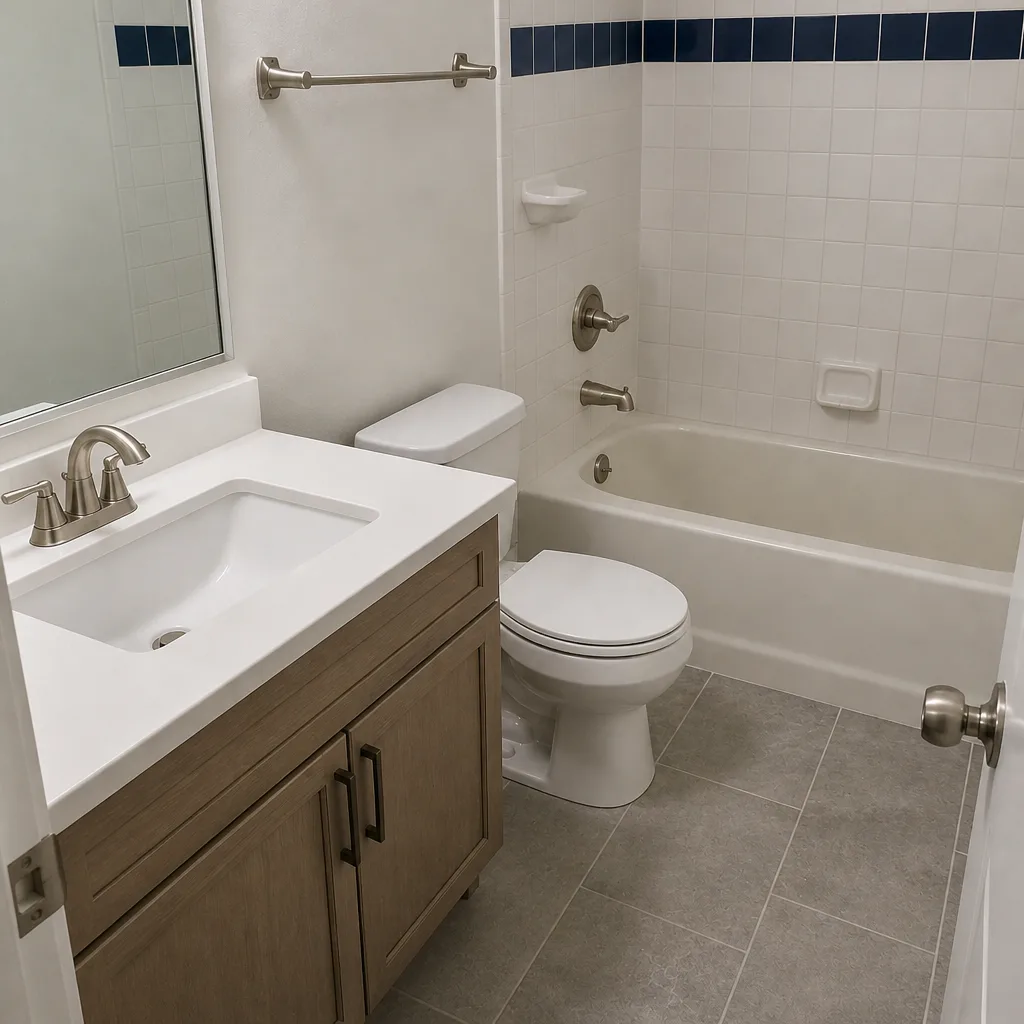 After
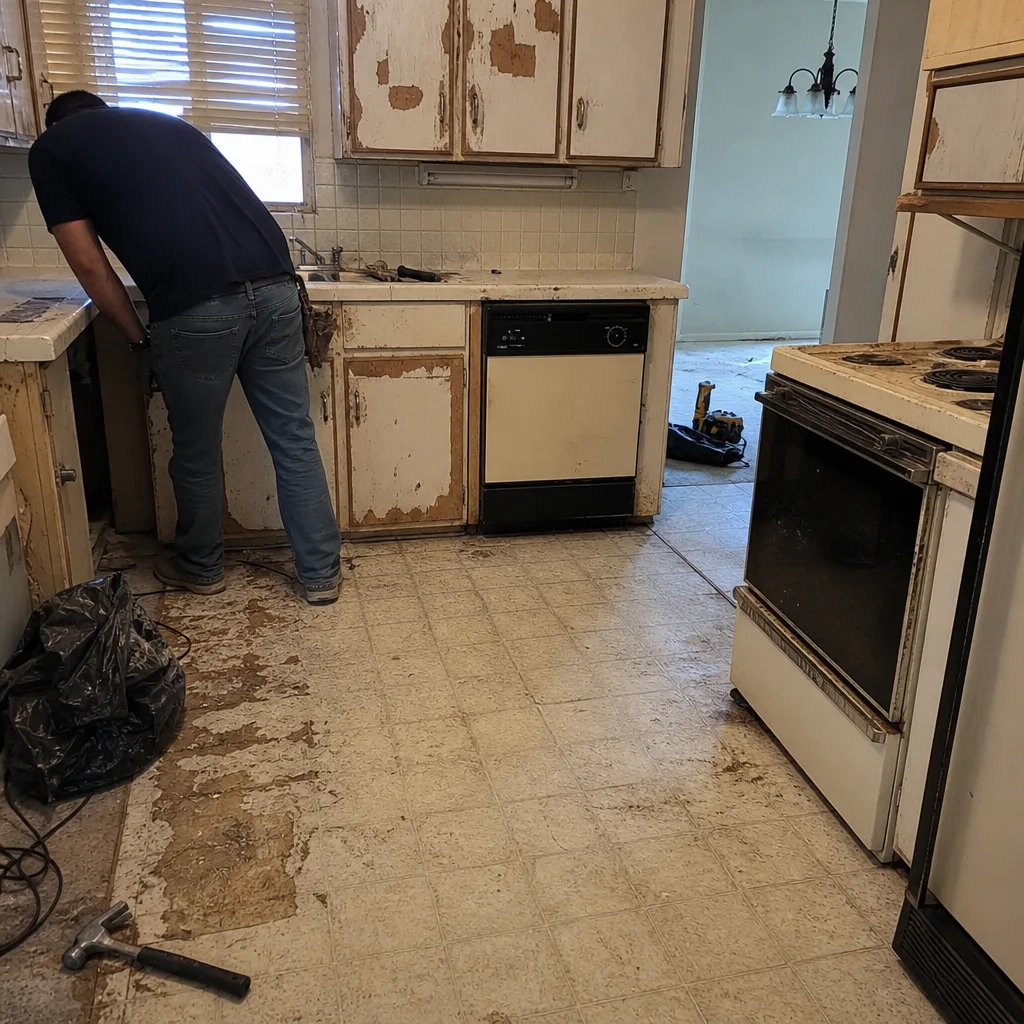 Before
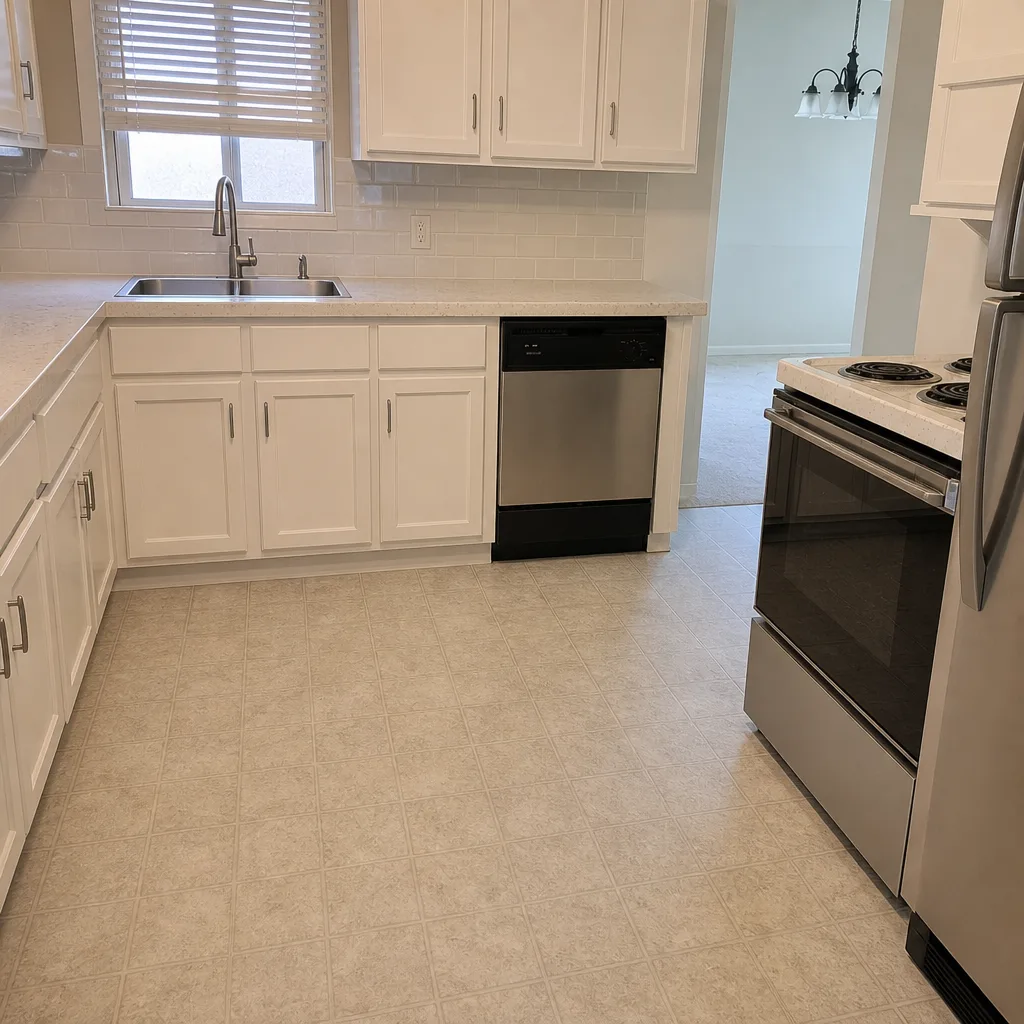 After
When to Call a Professional

Some warning signs you can confront an existing contractor about directly. Others mean it’s time to get a second set of eyes before more money changes hands. If a deposit was large and no work has started in two weeks, if a contractor can’t produce a license number, if you’re being asked to sign a change order that appeared out of nowhere, or if an inspection failed and nobody has an answer, get a professional opinion in writing before you pay another dollar.
Sawyer Remodeling Paradise offers free estimates in Paradise. We’ll walk the space, tell you where the work stands, and put a written price in writing. Call (866) 977-0526 to schedule yours. Our technicians have up to 21 years of experience, and every job runs under The Relay Visibility Guarantee: a live arrival time, photo updates before and after, and a written price before a single tool gets picked up.
Frequently Asked Questions
No written quote before work starts is the clearest red flag, because it means the price lives only in someone’s head. A written quote itemizes labor, materials, and allowances so you can compare and so there’s a paper trail. If a contractor won’t put the number in writing, walk away. Call (866) 977-0526 if you want a written price for comparison.
A deposit of 10% to 20% at signing is normal for most Paradise remodels, with the rest tied to stage payments as work is completed. Anything over 50% upfront should raise questions about cash flow. Keep a final payment held until the punch list is done and inspections pass. Call (866) 977-0526 for a written payment schedule before any work starts.
Ask for the license number and search it on the Nevada State Contractors Board public database. Confirm the license is active and that the classification covers the work being done. Any licensed contractor in Paradise should give you the number without hesitation. Call (866) 977-0526 if you want to talk through how a project gets run under a licensed company.
A verbal change order is hard to enforce and easy to argue about. In Nevada, the safest path is a written change order with a price and a signature before any extra work begins. If a contractor refuses to put a change in writing, the invoice at the end becomes their version of the story, not yours. Call (866) 977-0526 for an estimate that already includes the price in writing.
Uneven tile grout lines, drywall seams that telegraph through paint, and doors that don’t sit flush are the most common early physical signs in a Paradise remodel. In our dry climate, temperature swings make a rushed tile or drywall job fail faster than in more humid areas, so these signs show up early. Call (866) 977-0526 to have the work assessed before you commit to a fix.
Document everything, then file a complaint with the Nevada State Contractors Board and send a written demand to the contractor. For larger losses, a construction attorney or Clark County small claims court is the next step. A second opinion in writing from a licensed contractor usually anchors the case. Call (866) 977-0526 for a free estimate and a walk-through of what’s left to do.
The Bottom Line

The warning signs are not usually dramatic. They’re a price that isn’t in writing, a deposit that feels too big, a license number nobody will share, a response time that gets longer as the job drags, and a tile grout line you can feel with your hand. Check for them before you sign, and check again every week during the job. In Paradise, the homes we see with the fewest disputes belong to homeowners who knew what to look for and asked for a written price before the first tool came out of the case. If you want that version of the process from the start, that’s what we do.
Call (866) 977-0526 for a free estimate in Paradise. We’ll put the price in writing, name who’s coming and when, and back it with the 365-Day Done Right Promise so a job done wrong gets made right.
Written by the team at Sawyer Remodeling Paradise.