Last updated November 17, 2026








Free written scope consultation - allowances, timeline, and change-order rules on paper before a single trade is scheduled
How Long Does General Contractor Take? Timelines and What to Expect
A bathroom remodel quoted at “two to three weeks” that runs eight weeks isn’t just inconvenient. It’s often a sign the contractor was bidding time competitively rather than honestly, and that tactic is especially common in high-demand markets like Las Vegas, where crews get stretched thin and the schedule becomes the first thing to bend. The reality is that most projects take longer than the sales pitch suggests, and the difference between a smooth job and a nightmare usually comes down to two things: surprises hidden inside the walls and a schedule that was never realistic to begin with. This guide breaks down honest timelines by project type and shows you how to read a contractor’s schedule proposal before you sign anything. We’re Sawyer Remodeling Paradise, and we’ve watched enough Paradise projects go sideways on paper to know what a good schedule looks like.
Quick Answer
Most home remodeling projects take between two weeks and four months, depending on scope. A bathroom remodel typically runs 3 to 5 weeks, a kitchen remodel 5 to 8 weeks, a room addition 3 to 5 months, and a full-home renovation 4 to 8 months. The biggest delays come from hidden damage found after demolition, special-order materials, and Clark County permit and inspection wait times, so the most reliable schedules build those stages in from the start rather than treating them as surprises.
Styles & brands we work with
- Kitchen remodeling
- Bathroom remodeling
- Home additions & ADU
- Roofing
- Windows & doors
- Driveway & pavers
- Fence
Table of Contents
- Realistic Timelines by Project Type
- Clark County Permits and Inspections: The Wait You Can’t Skip
- How to Read a Contractor’s Schedule Before You Sign
- What Actually Causes Delays (Legitimate vs. Avoidable)
- Substantial Completion: What It Really Means
- Day-by-Day: What a Typical Remodel Looks Like
- Common Mistakes to Avoid
- Frequently Asked Questions
If you’re still deciding on the contractor itself, our general contractor in Sunrise Manor page covers how to vet one properly before you talk timelines.
Realistic Timelines by Project Type
The single most useful thing you can do before committing to a remodel is to know what a realistic timeline looks like for your specific scope. Here’s what we see on Paradise projects, broken down honestly.
- Bathroom remodel (full gut, 40 to 60 square feet): 3 to 5 weeks. Cosmetic only (new vanity, tile, fixtures) runs 2 to 3 weeks.
- Kitchen remodel: 5 to 8 weeks for a standard layout; 8 to 10 weeks if you’re moving plumbing or walls.
- Room addition: 3 to 5 months, including design, permits, foundation, framing, and finish.
- Full-home renovation: 4 to 8 months, sometimes longer for homes built before 1990.
- Whole-home cosmetic refresh (paint, flooring, fixtures only): 2 to 4 weeks.
Two things drive these ranges. First, scope: a galley kitchen that stays where it is costs weeks less than one where you’re relocating the sink and knocking out a wall. Second, the house itself. Paradise has a large stock of homes built between the 1970s and 2000s, and the older the house, the more likely you’ll find out-of-date drain lines, no moisture barrier behind the shower tile, or aluminum wiring tucked in a wall cavity. Those discoveries add days, not hours. When a contractor quotes “two weeks” for a full bathroom gut, ask what’s not in that number. For a deeper look at what a bathroom build actually involves, see our bathroom remodeling in Sunrise Manor page.
Clark County Permits and Inspections: The Wait You Can’t Skip
Every legitimate remodel that touches structure, plumbing, electrical, or mechanical work in Clark County needs a permit, and every permitted job gets inspected at set stages. That’s the part of a timeline no contractor can skip, and it’s the part dishonest schedules hide. In Paradise, permit review for a straightforward bathroom or kitchen commonly adds 1 to 3 weeks to the front end of the project, and inspection scheduling can add another day or two at each phase.
Here’s what the inspection stages look like on a typical remodel, in order:
- Rough-in inspection: after framing, electrical, plumbing, and HVAC are installed but before drywall goes up.
- Insulation inspection: after insulation but before drywall (on exterior walls and additions).
- Drywall and framing inspection: confirming the structure matches the approved plan.
- Final inspection: after finishes, fixtures, and final electrical are done, and before the job is legally complete.
If any stage fails, the crew fixes the issue, the inspector re-visits, and the whole job slips. A crew that planned for two inspection cycles and got one is on time. A crew that planned for zero and got two is a month late and looking for someone to blame. When we quote a Paradise project, the permit and inspection windows are in the calendar before we order a single material, because that’s the only way the number is real. If your contractor’s schedule doesn’t name these stages, it isn’t a schedule. It’s a hope.
How to Read a Contractor’s Schedule Before You Sign
A project schedule should be a document you can read in five minutes and hold the contractor to six months later. If you’re handed a single line (“kitchen remodel, 6 weeks”), you don’t have a schedule. You have a promise with no dates attached. A real schedule has these milestones in writing before work starts:
- Pre-construction dates: design sign-off, permit application, and material selections locked.
- Demolition start date and what gets removed.
- Rough-in inspection window with the expected inspection date.
- Drywall and finishing stages with realistic durations (drywall alone is 3 to 5 days before paint).
- Final inspection date and a buffer after it for punch list.
- Substantial completion date (more on this below) and the payment schedule tied to it.
- Change-order process: how a surprise gets priced and approved in writing before work continues.
Ask your contractor: “What date do you expect the rough-in inspection, and what’s the buffer if it fails?” If they can’t answer that, they haven’t scheduled your job. They’ve scheduled a mood. The Relay Visibility Guarantee exists to close that gap: a live arrival time, photo updates before and after each stage, and a written price before a single tool is picked up. Homeowners in Paradise shouldn’t have to call four times to find out which stage they’re in. A schedule with named milestones and photo checkpoints removes the guesswork.
What Actually Causes Delays (Legitimate vs. Avoidable)
Not every delay is a red flag. Some are legitimate and some are avoidable, and knowing the difference is how you hold a contractor accountable without being unreasonable.
Legitimate delays:
- Hidden water damage or rot: found after demo, when the wall opens and the framing is soft. This is common in Paradise homes with older plumbing or past roof leaks.
- Structural surprises: a wall that wasn’t load-bearing on the plan but is in reality, or vice versa.
- Back-ordered materials: special-order tile, cabinetry, or windows that ship late from the manufacturer. Naming premium surfaces like Cambria or Silestone in the schedule with expected delivery dates helps here.
- Inspection fails: when the inspector finds something the crew got wrong and the fix and re-visit add time.
Avoidable delays:
- Scheduling too aggressively to win the bid: a two-week bathroom quote that was never realistic for a 3 to 5 week job.
- Unbooked subcontractors: a crew that shows up, tears out, and then waits for a plumber who’s already on three other jobs.
- Permit not pulled up front: if the contractor starts work before the permit is issued, the whole job can be shut down mid-run.
- Material selections made after demo instead of before: ordering tile the day after demo starts means weeks of standing around waiting for the tile.
The pattern is simple: legitimate delays are surprises nobody could plan for, and avoidable delays are things a competent contractor planned badly on purpose. A schedule that accounts for material lead times, inspection windows, and a small contingency is the mark of a contractor who’s actually run jobs before.
Substantial Completion: What It Really Means
This term trips up more homeowners than any other phrase in a construction contract, and it’s the source of most payment disputes. Substantial completion does not mean “everything is done.” It means the job is done enough that it can be used for its intended purpose, and the remaining items are minor punch-list work. In other words, your kitchen is functional, the cabinets are hung, the counter is installed, the sink runs, and the lights work, but there might still be a loose outlet cover or a backsplash tile that needs re-grouting.
Here’s where the trouble starts. Contracts often tie the biggest payment to substantial completion, and homeowners assume that payment means “I get to enjoy a finished, spotless home.” Contractors mean “the major work is finished.” The gap between those two meanings is exactly where disputes happen, and it’s why every written price we hand a Paradise homeowner names the payment milestones and what “substantial completion” means before a single dollar changes hands. Call our team at (866) 977-0526 to ask what a clear substantial completion clause should say. That conversation is free.
Day-by-Day: What a Typical Remodel Looks Like
Here’s a realistic day-by-day view of a standard kitchen remodel in Paradise. Your project will vary in duration, but the sequence is honest.
- Days 1 to 3: demolition, removal of old cabinets, counter, and flooring; dumpster drop and site protection.
- Days 4 to 10: framing adjustments, rough plumbing, and rough electrical; permit inspection scheduled at end of rough-in.
- Days 11 to 14: insulation, drywall hung and taped, inspection for drywall.
- Days 15 to 18: cabinet installation and countertop template (Cambria or Silestone template takes a day and fabrication runs 5 to 10 business days).
- Days 19 to 24: countertop install, tile backsplash, plumbing and electrical finish, fixtures and appliances set.
- Days 25 to 30: flooring, paint touch-up, punch list, final inspection, and homeowner walkthrough.
Notice the countertop template in the middle. That single fabrication window is why kitchens run longer than homeowners expect. The same pattern applies to bathrooms: 3 to 5 weeks, with a check-point after tile set and a final walkthrough after the grout cures. For a closer look at what a full kitchen build runs in Paradise, our kitchen remodeling in Sunrise Manor page lays out the stages in more depth.
Realistic Budget Ranges Alongside Your Timeline
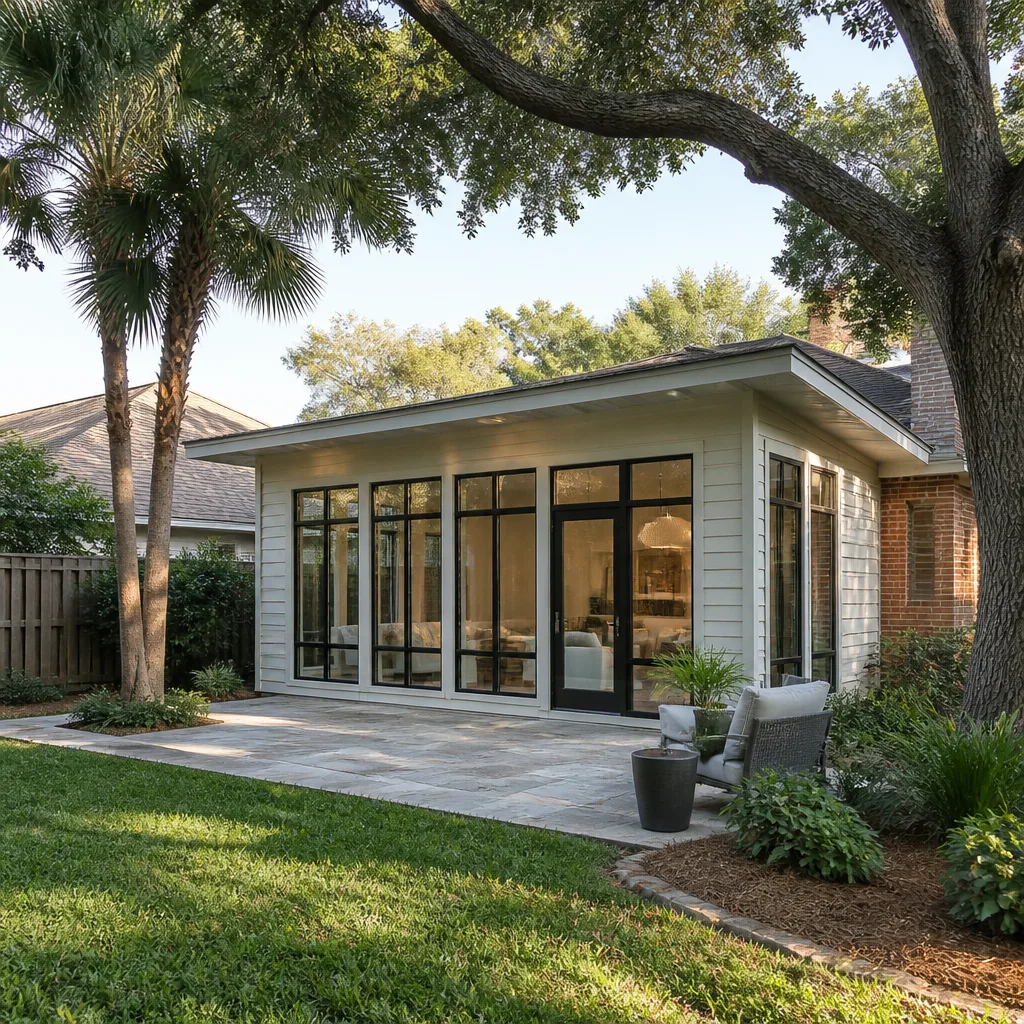
A timeline and a budget are two halves of the same decision, and a contractor who gives you one without the other is giving you half the answer. In Paradise, expect a full bathroom remodel to land roughly in the $12,000 to $28,000 range depending on size and finish level. Kitchens typically run $22,000 to $65,000, with premium counters, cabinetry, and appliance packages pushing the number higher. Room additions commonly start around $200 to $325 per square foot. These are ranges, not quotes. The only number that matters is a written one that names your materials and labor line by line before you sign.
Homeowners shopping on price alone often pick a contractor whose number was never real. That lower number shows up in three ways: cheaper materials not named in the contract, work with no permit, and a timeline so short it was never achievable. When you see a quote for a bathroom that runs 40% below everyone else, ask what material brands are in it and where the permit fees are. If neither is named, you found the answer. Our team cites named material partners like KraftMaid and Wellborn cabinetry, Cambria and Caesarstone counters, Kohler and Moen fixtures, and GAF and James Hardie exteriors for the same reason: it’s the difference between a budget you can hold to and a range that shifts the moment work starts.
See the difference
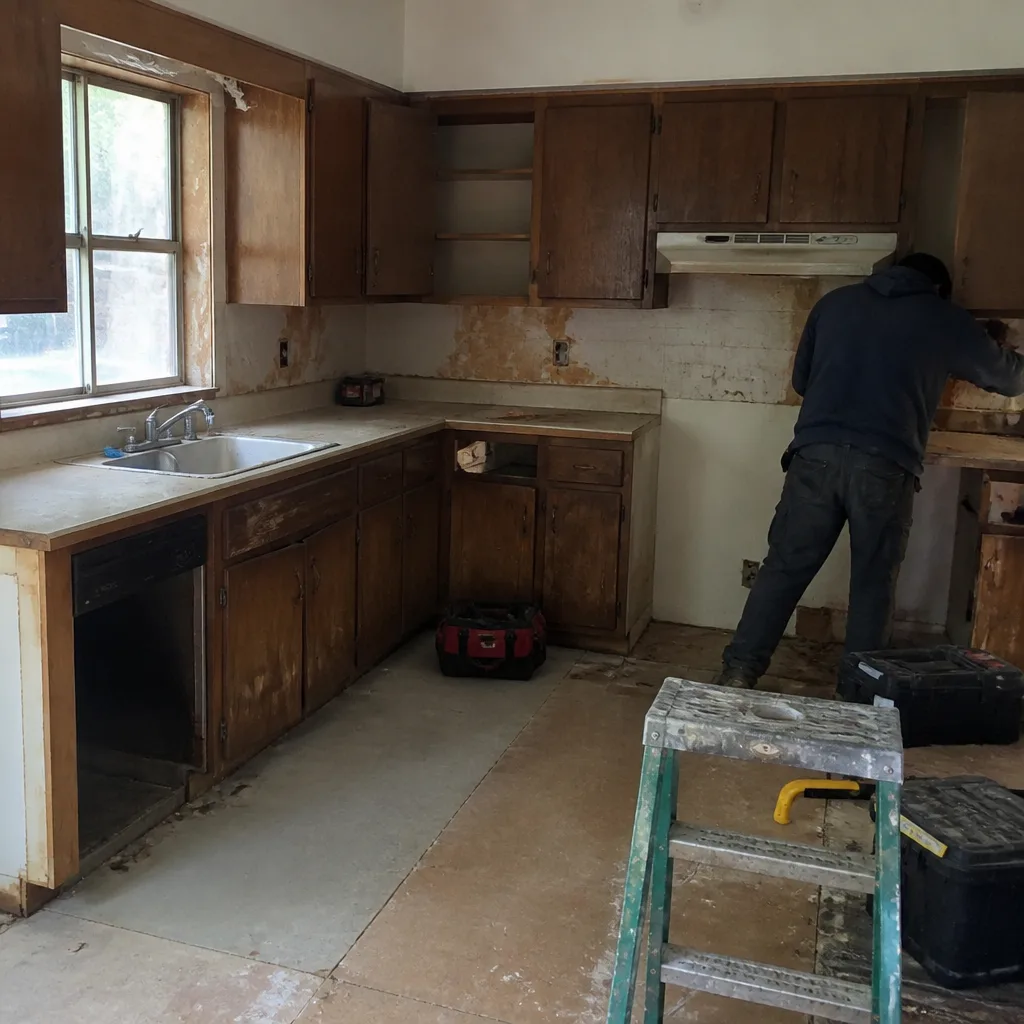 Before
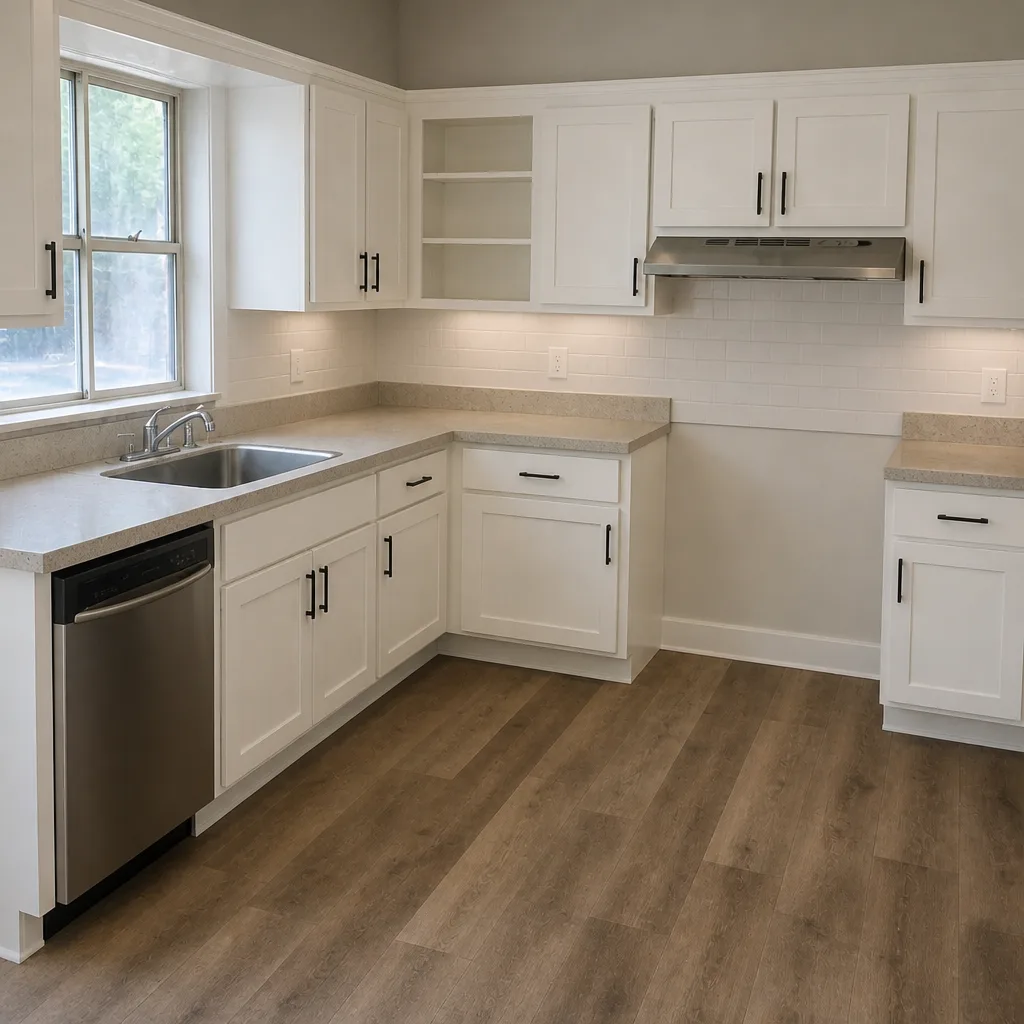 After
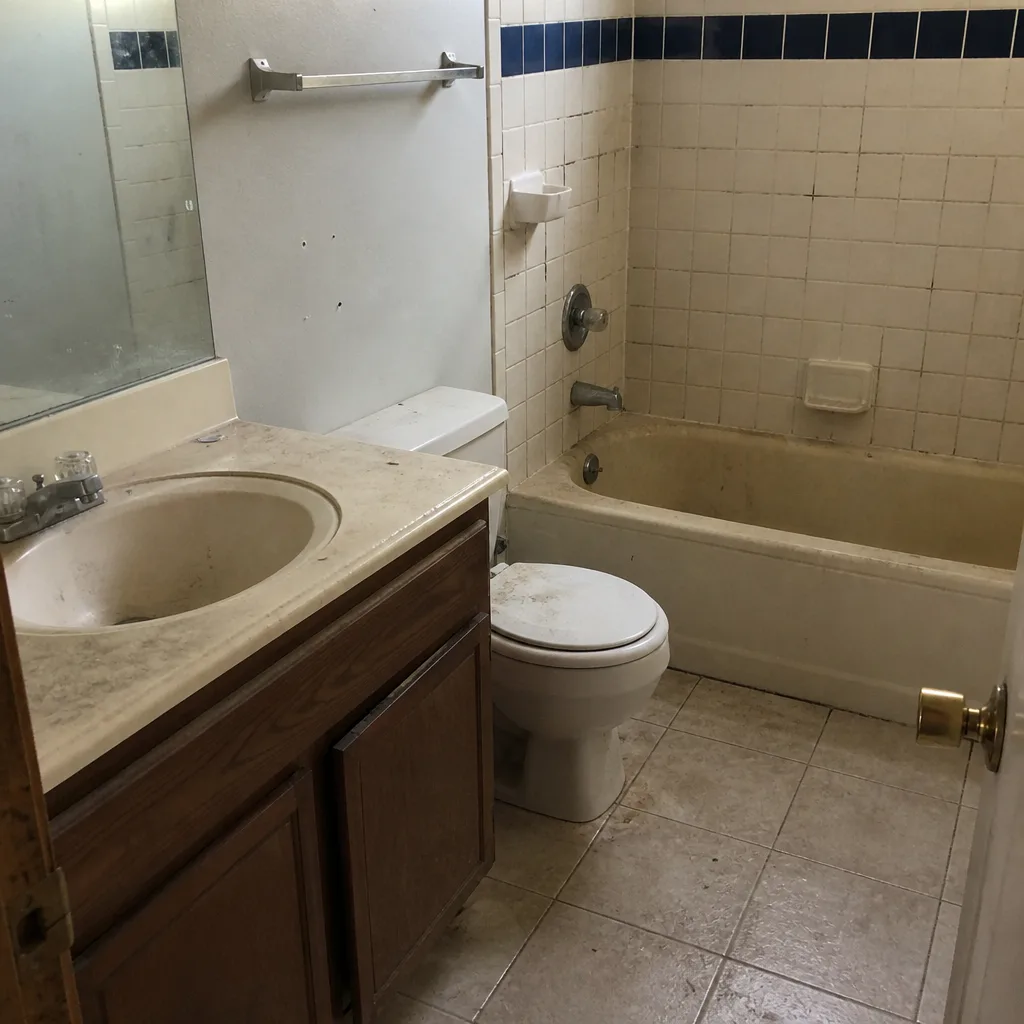 Before
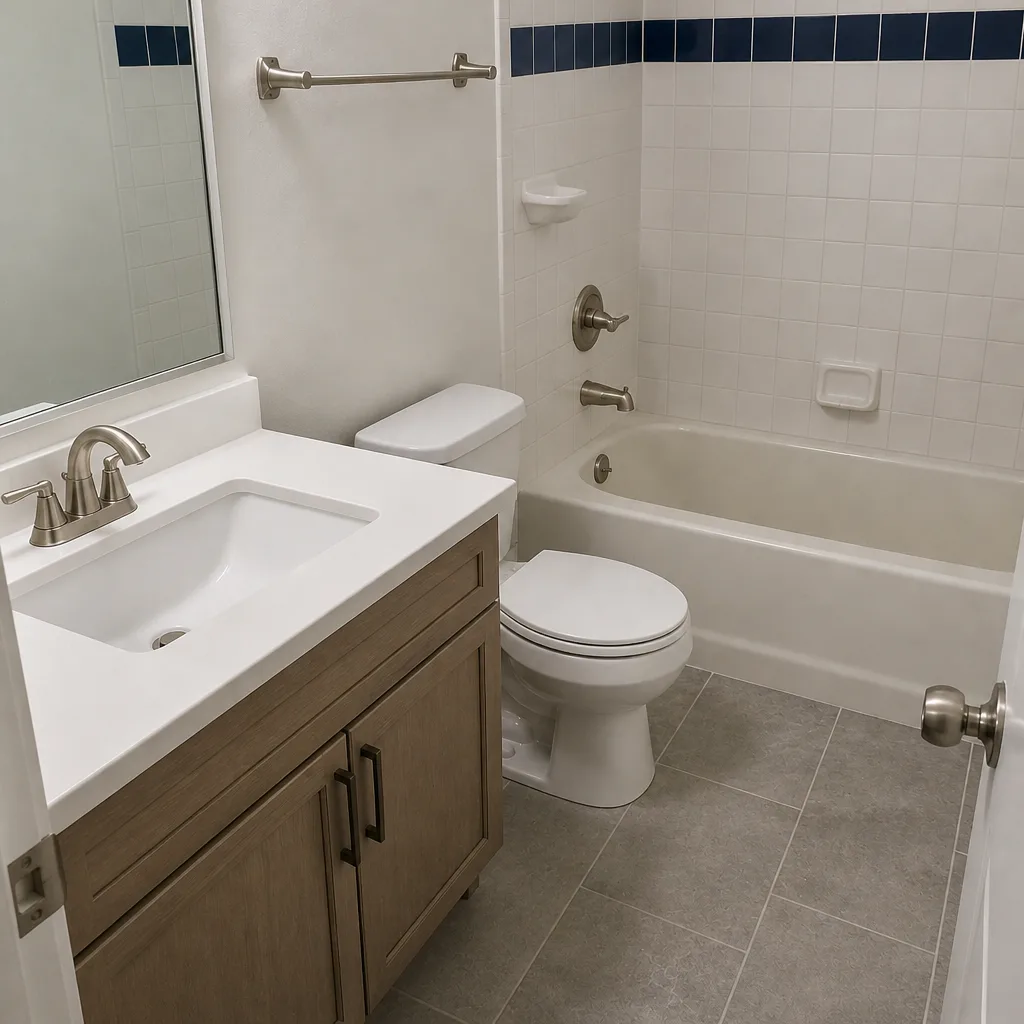 After
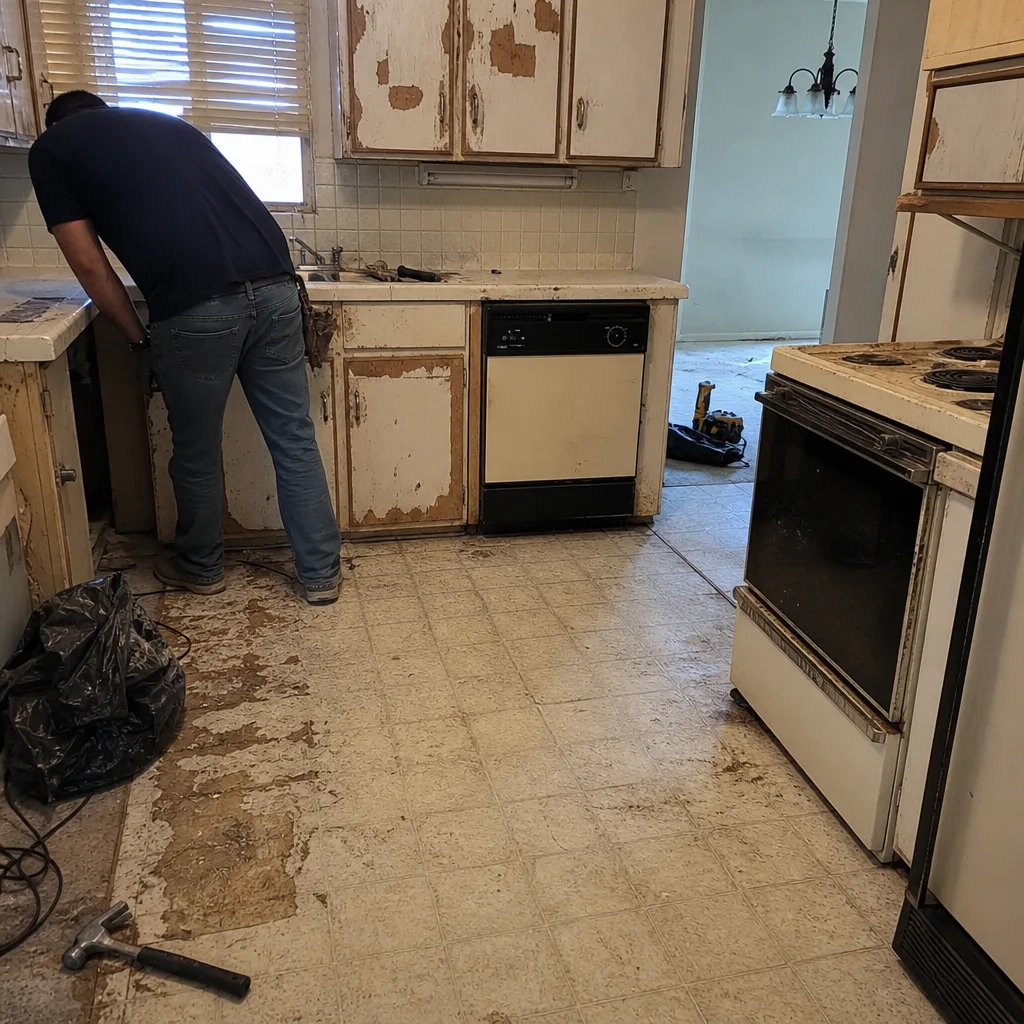 Before
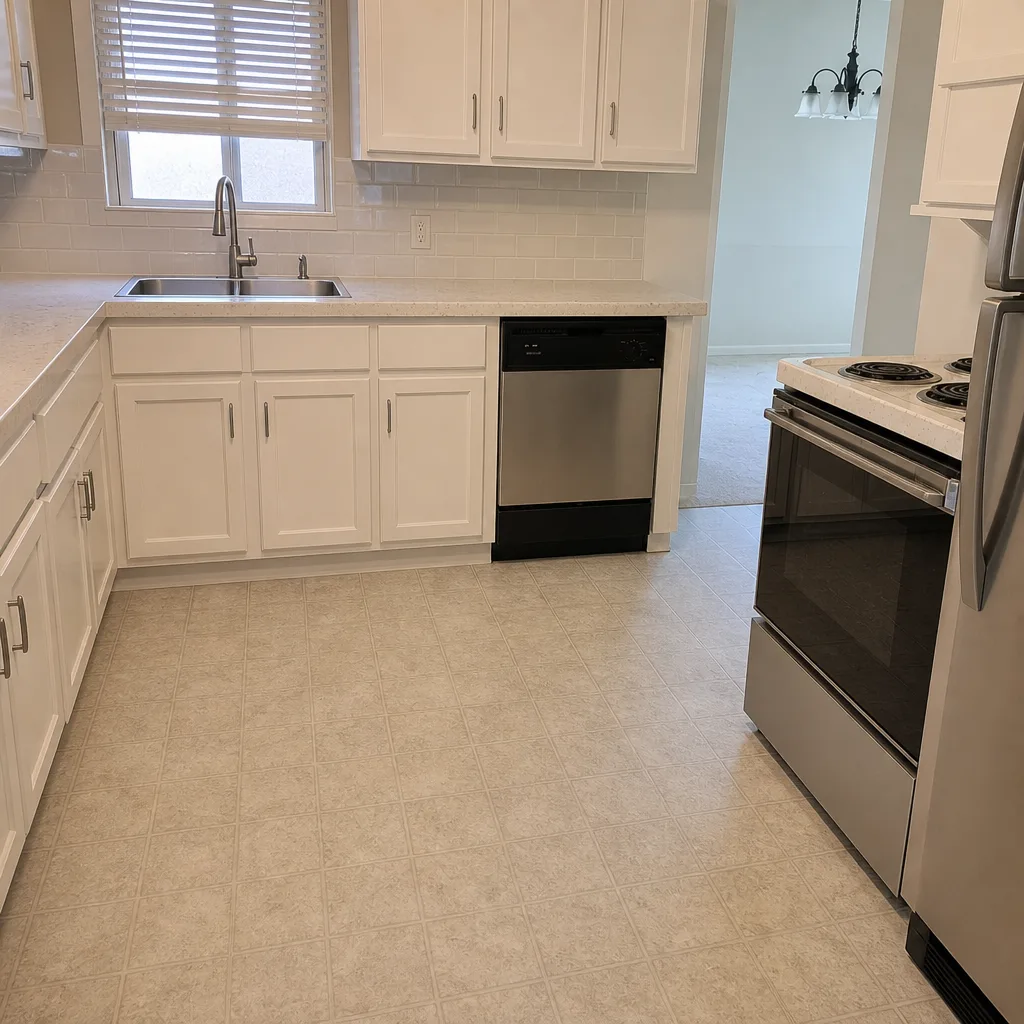 After
Common Mistakes to Avoid
- Signing a one-line timeline. If the schedule doesn’t name permit stages, inspection windows, and inspection dates, it’s a sentence, not a plan. Ask for the dates in writing or walk.
- Assuming “substantial completion” means “fully done.” It means “usable.” Get the definition in writing and tie your payments to the dates in the schedule, not just to the completion milestone.
- Choosing materials after demolition starts. In Paradise, special-order tile and cabinetry routinely take 2 to 4 weeks to arrive. Pick materials during pre-construction, not after the walls come down.
- Letting the contractor skip the permit. Clark County inspections exist for a reason, and a remodel without a permit can come back to bite you at resale. Insist the permit is pulled up front.
- Treating a “competitive” timeline as the deciding factor. In a high-demand market like Las Vegas, an aggressively short quote is often the bid that runs months. Compare schedules, not just totals.
- Not getting change orders in writing. Hidden water damage is a legitimate reason for extra time and cost, but only if the change is documented and priced before the crew proceeds. No signature, no additional work.
- Ignoring the punch-list payment stage. Hold a portion of the payment until the punch list is closed and the final walkthrough is done. This keeps the small items from dragging on for weeks.
Our Sawyer Remodeling Paradise home page walks through how our schedules and pricing work before the first day on site, if you want to compare ours against what you’ve been quoted.
When to Call a Professional
Some projects are weekend-friendly (painting, swapping a faucet, a light fixture), and some need a licensed general contractor because they involve permits, structure, or code. Call a professional when your project touches any of these: moving or adding walls, relocating plumbing or electrical, adding a room or addition, or any full bathroom or kitchen gut. If you’ve opened a wall and found soft framing, dated wiring, or no moisture barrier, that’s a call, not a DIY moment. If your current contractor stops showing up or your schedule has slipped past the inspection stage with no explanation, that’s also a call. Sawyer Remodeling Paradise offers free estimates in Paradise with a written price before any work starts. Our technicians have up to 21 years of experience, and the 365-Day Done Right Promise covers every project we finish. Call (866) 977-0526 to schedule a free estimate.
Frequently Asked Questions
A full bathroom remodel in Paradise typically takes 3 to 5 weeks from demolition to final walkthrough, with cosmetic-only refreshes running 2 to 3 weeks. The biggest variable is what’s inside the walls when demo starts, plus the Clark County permit and inspection windows, which add roughly 1 to 3 weeks at the front end. Call (866) 977-0526 for a written timeline built around your specific bathroom.
Contractors’ timelines run long for two reasons: honest surprises (hidden water damage, structural discoveries, back-ordered materials) and dishonest bidding (quoting a short timeline to win the job). The first is unavoidable; the second is a sales tactic. Ask any contractor whether permit and inspection stages are named in the schedule before you sign. If they aren’t, that’s the reason the job runs long.
Yes, permit and inspection stages add mandatory time to nearly every remodel in Paradise, usually 1 to 3 weeks for permit review and 1 to 2 days for each inspection stage. That time is fixed by Clark County and cannot be skipped. Any schedule that doesn’t include permit and inspection windows isn’t a real schedule.
Yes, most homeowners in Paradise stay in their home during a bathroom or kitchen remodel, and a good schedule makes that possible by keeping water and power interruptions short and clearly scheduled. Full-home renovations are different; expect to vacate for parts of it. Ask your contractor to name the days utilities are off, so you can plan around them.
Substantial completion means the project is usable for its intended purpose and only punch-list items remain. “Fully done” means every item on the punch list is closed and the final walkthrough has passed. Payment schedules often trigger at substantial completion, so get the definition in writing and tie your final payment to the punch list and walkthrough, not just to substantial completion.
A typical kitchen remodel in Paradise runs $22,000 to $65,000 and takes 5 to 8 weeks, with premium finishes pushing it higher. The two biggest time variables are countertop fabrication (5 to 10 business days after templating) and cabinet lead times. Call (866) 977-0526 for a written, line-item estimate; estimates are free and the price doesn’t change once work starts.
The Bottom Line
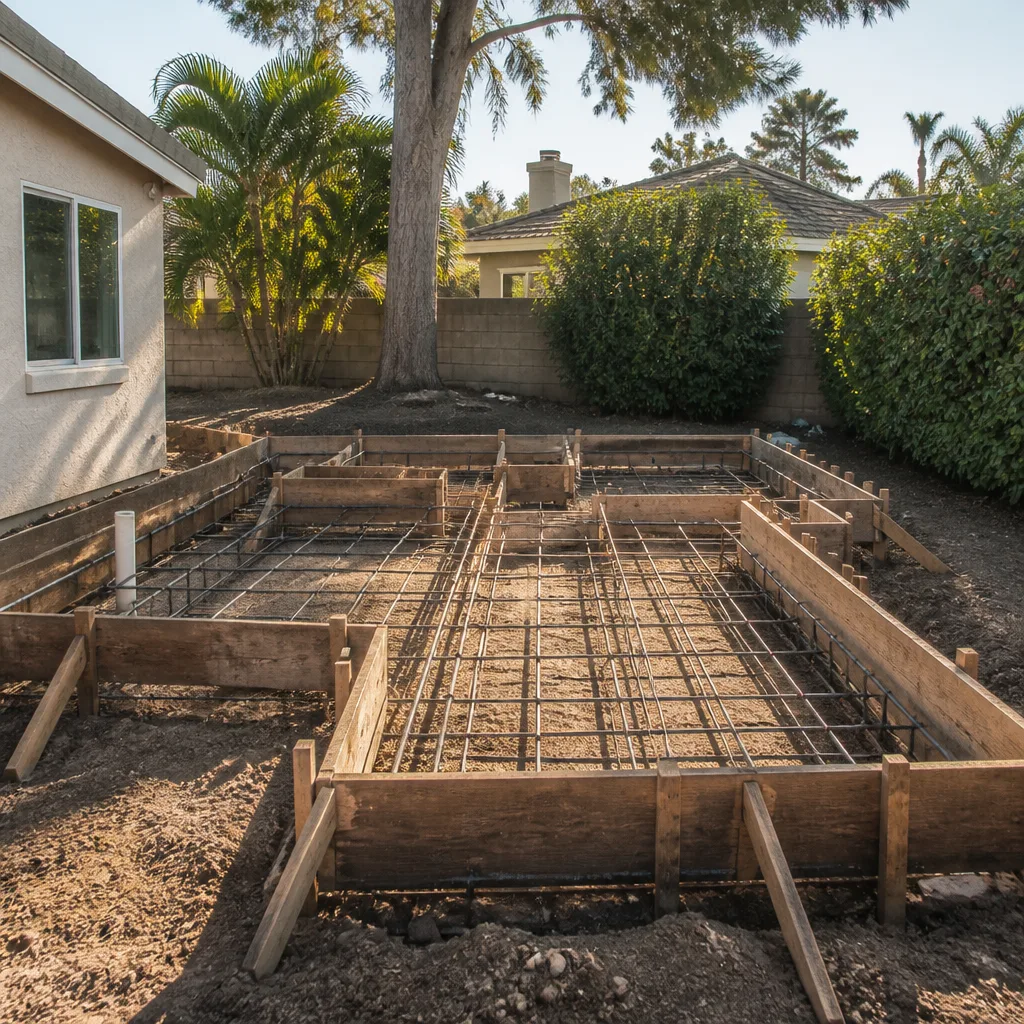
Timelines break for two reasons: surprises inside the walls and a schedule that was never realistic. A bathroom remodel that takes 3 to 5 weeks honestly, a kitchen that takes 5 to 8, and a room addition that takes 3 to 5 months are all fair numbers when the schedule names permit stages, inspection windows, and material lead times up front. The contractor you want is the one who puts those dates in writing and keeps you informed at every stage, not the one who quoted shortest and disappeared. The number on the invoice should be the number you approved, and the schedule you signed should be the schedule you get.
Sawyer Remodeling Paradise works in Paradise under The Relay Visibility Guarantee: a live arrival time, before-and-after photo updates at each stage, and a written price before any work starts. The 365-Day Done Right Promise covers the year after we close. Our technicians are background-checked, and we answer our phones live. Call (866) 977-0526 for a free estimate, and we’ll hand you a written timeline and a written price in the same visit.
Written by the team at Sawyer Remodeling Paradise.